Non-ablative Radiofrequency for Facial Rejuvenation
Non-ablative Radiofrequency for Facial Rejuvenation
Célia Luiza Petersen Vitello Kalil, Clarissa Prieto Herman Reinehr and Celso Alberto Reis Esteves Jr. Department of Dermatology, Santa Casa de Misericórdia de Porto Alegre Hospital, Porto Alegre, Brazil Brazilian Society of Dermatology, Porto Alegre, Brazil
Abstract
Over the last decades, non- or minimally invasive skin rejuvenation techniques have shown continuous and growing demand. Although surgical procedures are the “gold standard” for facial and body skin sagging treatment, many patients choose procedures with lower downtime, even if it means more subtle results, because they don’t want to be away from their work and social activities. In order to fulfill this need, a range of non-ablative devices was introduced, such as lasers, devices using light sources – as intense pulsed light (IPL) – and radiofrequency. This chapter discusses radiofrequency, an extremely valuable therapeutic option for rejuvenation, as it allows patients to keep realizing their activities and also provides “natural” results.
Keywords RadiofrequencyRejuvenationCollagenSkin agingNon-ablative devicesSkin laxity
Introduction
Over the last decades, non- or minimally invasive skin rejuvenation techniques have shown continuous and growing demand (Mulholland 2011). Although surgical procedures are the “gold standard” for facial and body skin sagging treatment, many patients choose procedures with lower downtime, even if it means more subtle results, because they don’t want to be away from their work and social activities (Mulholland 2011; Bogle and Dover 2009; Brightman et al. 2009; DeHoratius and Dover 2007; Afrooz et al. 2014; Elsaie 2009; Sadick et al. 2009). In order to fulfill this need, a range of non-ablative devices was introduced, such as lasers, devices using light sources – as intense pulsed light (IPL) – and radiofrequency (Mulholland 2011; Alexiades-Armenakas et al. 2008).
The use of radiofrequency as a treatment of periorbital rhytides and sagging was described in 2003 by Fitzpatrick et al., with more than 80% of the treated patients showing improvement after a monopolar radiofrequency session (Fitzpatrick et al. 2003).
Further studies have evaluated its use in the treatment of sagging neck skin, improvement of lower third face contour, management of atrophic acne scars, and treatment of body laxity and cellulite (Brightman et al. 2009).
Radiofrequency
The devices used for laxity treatment work by producing enough heat to warm up the dermis (DeHoratius and Dover 2007; Hodgkinson 2009). Beyond radiofrequency, ultrasonic waves and infrared radiation devices also act through dermal heating (DeHoratius and Dover 2007).
Radiofrequency is a form of electromagnetic energy in which electrons move in an electric field and change its polarity up to six million times per second. The alternating electric current generated fluctuates between 3 kHz and 300 MHz (Bogle and Dover 2009; Osório and Torezan 2009). When trying to move into the tissue, the resistance to the rotational movement of electrons generates high-frequency oscillation in the water molecules of the dermis (Goldberg et al. 2008). This energy oscillation is eventually transformed into thermal energy (Ohm’s law) (Mulholland 2011; Hodgkinson 2009; Osório and Torezan 2009). The resistance to the passage of electrons depends on the tissue’s characteristics, such as its temperature and the concentration of water (Abraham and Mashkevich 2007).
The formula that represents the total energy follows:

- I = current
- R = tissue impedance
- T = time of application
The principle that guides the process is called the reverse thermal gradient: protective epidermal cooling occurs alongside dermal heating (Goldberg 2004). The epidermal cooling is applied before, during, and after the application of the radiofrequency handpiece (Goldberg 2004). This protection of the epidermis results in lower risk of infection, scarring, and pigmentary changes when compared to ablative procedures.
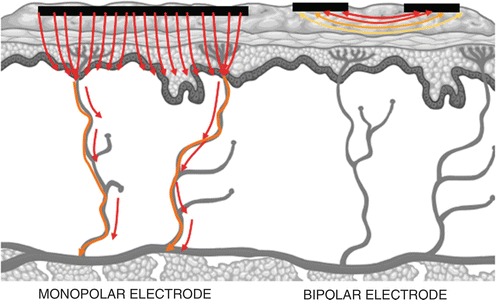
The heating of dermal collagen to between 50 and 70 °C (degrees Celsius) results in the rupture of hydrogen bonds and in changes in the conformation of collagen fibers, which lose their three-dimensional structure and assume an amorphous form, causing the fiber to contract by 30% and thicken (immediate tissue retraction) (Hodgkinson 2009; Bogle et al. 2007). The collagen contraction is a time- and temperature-dependent process: for every 5° reduction in temperature, a 10 min increment is required to obtain the same amount of retraction (the Arrhenius equation) (Brightman et al. 2009). In monopolar radiofrequency, the dermal heating is expected to reach around 65–75 °C, and the epidermis must be maintained at a temperature below 40 °C. If the dermal heat produced is suboptimal, it will not improve sagging and rhytides. In the event of excessive heat production, atrophy, scars, erosions, and skin discoloration may occur (Royo de la Torre et al. 2011) (Fig. 1).

After that begins the subepidermal inflammatory reaction process, resulting in neocollagenesis and a gradual improvement seen at 6–12 weeks (late effect) (Steiner and Addor 2014).
Moreover, the heat delivered to the deeper tissues stimulates adipose tissue capillary blood flow and accelerates lipid metabolism (Hodgkinson 2009).
Types of Radiofrequency Delivery (Monopolar/Multipolar (Bipolar and Tripolar)/Fractional)
Monopolar Radiofrequency
This first generation of radiofrequency produces volumetric (three-dimensional) heating of the dermis and subcutaneous tissue in a short period of time. The maximum depth reached is 20 mm, and it depends on the size and geometry of the handpiece (Steiner and Addor 2014). The type of handpiece used and the amount of energy delivered through it are the main determinants of the depth reached (Hodgkinson 2009; Alster and Lupton 2007). Handpieces with larger contact areas on the treated surface obtain the deepest dermal heating (Goldberg et al. 2008).
There is only one active electrode in contact with the skin surface to be treated (a dipole in the device handpiece) in this type of radiofrequency, and the current flows from this electrode toward a neutral or return electrode placed in a distant location, usually on the back (Hodgkinson 2009). Most of the heat is produced in the area located below the active electrode (Steiner and Addor 2014) (Fig. 2).
Thermage CPT System (ThermaCool®)
- Radiofrequency generator: alternating current (AC) 6.78 MHz, maximum flow 225 J/cm2, with a display through which current, energy, number of sections, duration of treatment, and impedance can be monitored. On the display, the energy can be selected according to the area to be treated (Hodgkinson 2009; Abraham and Mashkevich 2007).
- Pulsed cryogen within the treatment handpiece: cooling system before, during, and after the application of radiofrequency (Goldberg 2004).
- Cable connected to a disposable treatment handpiece containing the treatment electrode inside: single use, with duration limited by the number of shots (200, 400, or 600) and time (“one handpiece, one patient, one treatment”) (Hodgkinson 2009; Abraham and Mashkevich 2007).
- Microprocessor: located on the handpiece, which controls pressure, current flow, and skin temperature in contact with the handpiece (Abraham and Mashkevich 2007).
There are 0.25 cm2 handpieces used to treat the upper eyelid and fine wrinkles, and 3.0 cm2 handpieces used for the lower eyelid, periorbital wrinkles, and the bottom of the eyebrow region. In addition, there is the DC body handpiece and a specific body handpiece for cellulite treatment (Hodgkinson 2009).
A complete cycle of radiofrequency emissions ranges from 1.5 to 1.9 s (Steiner and Addor 2014).
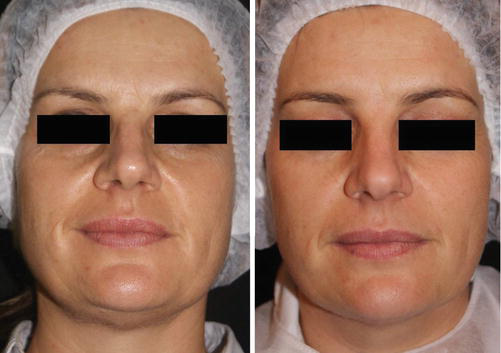
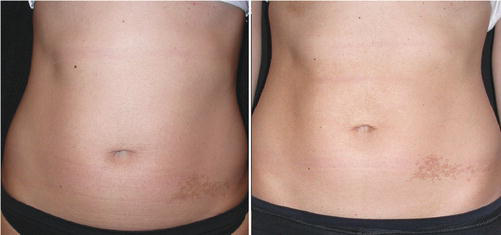
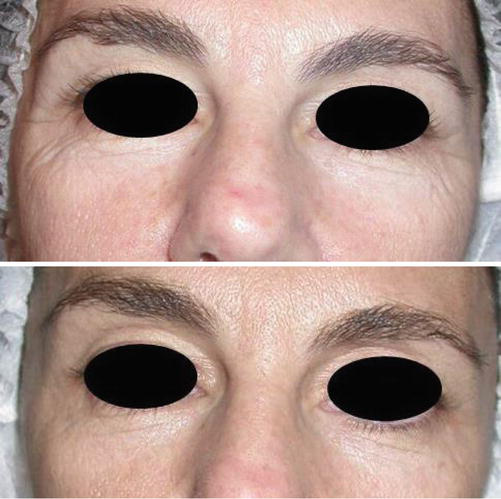
The treatment is performed in the clinic with no need for topical anesthetic, since it is only slightly painful and also because evaluation of the heat intensity by the patient is necessary to reduce the risk of possible complications. The postoperative period does not require specific care, and one session gives good results (Steiner and Addor 2014) (Figs. 3, 4, and 5).
Multipolar Radiofrequency
Bipolar
In this type of radiofrequency, there are two active electrodes in contact with the area to be treated, located at a fixed distance, and the current flows only in the space between them (closed power circuit) (Sadick 2007). This type of radiofrequency produces more superficial dermal heating and reaches a maximum depth of 2–4 mm, this maximum depth being half the distance between the electrodes. More sessions are necessary to achieve results similar to those obtained with monopolar radiofrequency (Steiner and Addor 2014).
Among the RF devices that use bipolar energy, we may cite Aluma™/Lumenis®, Santa Clara, and Accent® and Accent XT®, Alma Lasers.
Tripolar
It is the third generation of radiofrequency, which has three active electrodes that deliver energy and enhance the flow. Although smaller, the energy released is more concentrated when compared to mono- or bipolar radiofrequency (Steiner and Addor 2014). This technique allows homogeneous heating of the dermis and hypodermis, reaching 20 mm deep with the use of lower power, approximately 50 W (Steiner and Addor 2014). An example of this technology is found in the device Apollo TriPollar®, Pollogen LTDA.
| Monopolar | Multipolar | |
|---|---|---|
| Bipolar | Tripolar | |
| 1 active electrode | 2 active electrodes | 3 active electrodes |
| Depth 20 mm | Depth 2–4 mm | Up to 20 mm |
| Deeper | More superficial; multiple passages and a greater number of sessions | Deeper; energy is more concentrated than with monopolar radiofrequency |
Fractional Radiofrequency
Fractional radiofrequency is a minimally invasive bipolar radiofrequency technique in which the heat generated by an electromagnetic current results in cellular evaporation in the epidermis (Reddy and Hantash 2009). Electromagnetic waves cause oscillations of the water molecules and produce thermal energy in the dermis. This controlled volumetric heating of the dermis will ultimately stimulate neocollagenesis. The device comprises electrodes or microneedles arranged in pairs. The technique combines a non-ablative coagulative effect on the dermis with areas of controlled ablation in less than 5% of the treated epidermis (Taub and Garretson 2011). This RF mode leaves intermediate areas of treated skin alongside untreated areas that function as a cell reservoir and accelerate healing. Fractional radiofrequency can be used in facial rejuvenation and the treatment of acne scars (Steiner and Addor 2014; Taub and Garretson 2011).
Plasma
The newest type of radiofrequency uses the state of matter called plasma. Plasma pulses are created when very high radiofrequency energy passes through inert nitrogen and oxygen gas and generates ionized gas. The handpiece directs the energy formed in this way to the treated surface. The operating principle is the same as for other types of radiofrequency, with dermal heating and stimulation of neocollagenesis (Rivera 2008; Spandau et al. 2014).
| Radiofrequency devices/manufacturer | Radiofrequency (RF) technology |
|---|---|
| Thermage™/Thermage | Monopolar RF |
| Aluma™/Lumenis®, Santa Clara | Bipolar RF and vacuum |
| Accent®, Accent® XL/Alma Lasers | Unipolar and bipolar RF |
| Apollo TriPollar®/Pollogen LTDA | Tripolar RF |
| Polaris ReFirme™/Syneron | Bipolar RF and diode laser |
| ReFirme™/Syneron Medical | Bipolar RF and optical energy |
| Reaction™/Viora | Multipolar RF and vacuum |
| PowerShape™/Eunsung Global Corp. | Multipolar/bipolar RF and vacuum |
| Apollo®/Pollogen LTDA | Bipolar RF |
| Venus Freeze®/Venus Concept | Multipolar RF |
| Triniti E-max®/Syneron Candela | Bipolar RF + diode laser |
| Radiofrequency devices/manufacturer | Radiofrequency (RF) technology |
|---|---|
| Scarlet RF™/Viol Co., LTDA | Fractional bipolar RF |
| HF Fraxx®/Loktal | Fractional RF with microneedles |
| Matrix RF®/Syneron | Fractional bipolar RF |
| Renesis®/Primaeva Medical, Inc. | Fractional bipolar RF |
| ePrime®/Syneron Candela | Fractional bipolar RF |
| Duet RF PowerShape®/Eunsung Global Corp | Fractional and thermal RF |
Histopathological Changes
According to what was reported by Zelickson et al. and Meshkinpour et al., denaturation of collagen fibers and mRNA expression of collagen I are observed after radiofrequency. The increase in collagen III occurs at a higher intensity than that of type I collagen, with a peak between the sixth and tenth weeks post-procedure (Meshkinpour et al. 2005; Zelickson et al. 2004). Javate et al. demonstrated an intact epidermis with increased thickness and amount of collagen fibers in the superficial and deep dermis in post-radiofrequency non-ablative biopsies (Javate et al. 2011).
In 2011, El-Domyati et al. observed that after six monopolar radiofrequency sessions at biweekly intervals, skin biopsies showed epidermal hyperplasia that continued to increase for 3 months after the end of treatment, an increase in the granulosa layer, and an increase in the degree of epidermal organization. Besides that, the study showed a reduction of elastosis in the papillary dermis and increases in the amount of collagens I and III 3 months after treatment that were statistically significant (El-Domyati et al. 2011).
A study with non-ablative lasers (pulsed dye laser and Nd:YAG) observed similar effects in stimulating collagen production and in the elevation of enzymes crucial for the remodeling of dermal proteins of the extracellular matrix (MMPs) (Orringer et al. 2005).
Indications
FDA-approved uses for monopolar RF, ThermaCool System (Thermage, Inc., Hayward, California) (Abraham and Mashkevich 2007):
- Treatment of periorbital skin sagging (FDA approved 2002)
- Treatment of periorbital rhytides (FDA approved 2002)
- Treatment of perioral rhytides (FDA approved 2002)
- Treatment of facial rhytides (FDA approved 2004)
- Treatment of general rhytides (FDA approved 2005)
As a result, in general, facial contour (jawline) and sagging are improved. The technique can be used in the treatment of moderate submental shrinkage and sagging in the neck region.
The middle third of the face may also benefit, with attenuation of the nasolabial groove and reduction of sagging in the treated area (Sukal and Geronemus 2008).
Other indications:
- Treatment of body cellulite – associated with bipolar radiofrequency vacuum (VelaShape® – Syneron Candela) (Brightman et al. 2009)
- Waist circumference reduction – bipolar radiofrequency associated with vacuum (VelaShape® – Syneron Candela) (FDA approved in 2007) (Brightman et al. 2009)
- Treatment of atrophic acne scars – all types of radiofrequency may be used (monopolar, multipolar, and fractionated) (Taub and Garretson 2011; Rivera 2008)
- Body treatment: laxity in the upper limbs, abdomen, and buttocks (Hodgkinson 2009) (FDA approved December 2005)
- Treatment of active acne – reported with Thermage® (Dierickx 2004)
- Radiofrequency in drug delivery (Subramony 2013; Gratieri et al. 2013)
Radiofrequency may be used as an adjunct in the treatment of gynoid lipodystrophy (Osório and Torezan 2009; Site Thermage). Goldberg et al. evaluated the efficacy of monopolar radiofrequency treatment of cellulite of the thigh in six sessions at biweekly intervals in 30 patients, showing a reduction in thigh circumference and improvement in the degree of cellulite, with no changes in lipid metabolism (Goldberg et al. 2008).
Patient Selection
The ideal patient for radiofrequency facial rejuvenation should be between 30 and 60 years old, presenting with mild to moderate skin sagging and facial rhytides, and should have realistic treatment expectations (Abraham and Mashkevich 2007; Goldberg 2004). Patients who have undergone face-lift surgery and present recurrent mild laxity 2–3 years after the procedure are, in general, good candidates for radiofrequency (Hodgkinson 2009; Abraham and Mashkevich 2007).
Patients presenting sagging after weight loss and abdominal sagging after pregnancy also benefit from body radiofrequency.
Correct patient selection is a major determinant of the level of response to treatment (Suh et al. 2013). Patients of advanced age, who are obese, and with marked sagging will present mild results (Abraham and Mashkevich 2007). However, once the limitations have been explained, if the patient does not wish to undergo more invasive procedures, radiofrequency is an interesting option (Goldberg 2004).
The correct selection of patients is a major determinant of the level of response to treatment (Suh et al. 2013). Patients of advanced age, obese, and with marked sagging will have less satisfactory results (Abraham and Mashkevich 2007). However, if the patient does not wish to be subjected to more invasive procedures, and even after the limitations have been explained still wants to undergo radiofrequency, it is possible to do so (Goldberg 2004).
Benefits of the Procedure (Pros and Cons)
If radiofrequency, a non-ablative technique, is compared with ablative and surgical procedures, the procedure allows faster recovery and a lower risk of complications. The results, however, are more discrete (Goldberg 2004). Another benefit concerns the possibility of performing the procedure on all skin types, since the operating mechanism of radiofrequency differs from that of lasers and there is no absorption or scattering by tissue melanin (Abraham and Mashkevich 2007). Moreover, it can be used on hairy areas without risk, because it does not damage the follicle.
Contraindications
Monopolar RF
Absolutes (Abraham and Mashkevich 2007)
- Patients with a cardiac pacemaker or defibrillator
- Patients with other implantable electronic devices
- Skin pathologies in the application area
- Infection at the application site
- Presence of permanent fillers in the area to be treated, especially polymethyl methacrylate (PMMA)
Relative
- Smoking
- Autoimmune disease
- Previous radiotherapy at the application site
- Pregnancy
- Chronic use of corticosteroids or nonsteroidal anti-inflammatory drugs
- Other conditions that can impair healing
The use of monopolar radiofrequency on areas with metal plates or on tattoos is not recommended (Abraham and Mashkevich 2007).
Multipolar RF
Absolutes
- Patients with a cardiac pacemaker or defibrillator
- Patients with other implantable electronic devices
- Skin pathologies in the application area
- Infection at the application site
- Presence of permanent fillers in the area to be treated, especially polymethyl methacrylate (PMMA)
- Inelastic scars
- Use of photosensitizing medication
- Systemic neoplasm
- Venous thrombosis with use of anticoagulants
Fractional RF
Absolutes
- Patients with a cardiac pacemaker or defibrillator
- Patients with other implantable electronic devices
- Skin pathologies in the application area
- Infection at the application site
- Presence of permanent fillers in the area to be treated, especially polymethyl methacrylate (PMMA)
- Silicone prosthesis in the area to be treated
- Use of a copper IUD (in the case of treatment of the lower abdomen)
- Dental abscess if applied to the facial area
- Active rosacea
Contraindication to RF in the Eyelid Region
Patients who have undergone prior corneal surgery cannot undergo radiofrequency in the eyelid region because of the need to use an intrapalpebral protector that could injure the cornea (Steiner and Addor 2014).
Pre-procedure Care
Standardized pre-procedure photographs are essential. There are systems that allow, in addition to photographic standardization, the examination of variations in pigmentation and epidermal thickness and the number and depth of rhytides, enabling the assessment of therapeutic response (Suh et al. 2013).
Application Techniques
For monopolar and multipolar radiofrequency, the following precautions should always be followed:
- Fulfillment of the consent form, with the necessary explanations, expected results, side effects, and possible complications. The form should be handled by a dermatologist, and all of the patient’s questions must be clarified. Make sure the patient does not have any of the contraindications to the procedure.
- Before the procedure, it is necessary to remove all metals in contact with the patient’s skin (jewelry, costume jewelry, watches).
- Clean the skin area where the radiofrequency will be applied, remove makeup, and perform antisepsis of the skin with isopropyl alcohol (Steiner and Addor 2014).
After that, for monopolar radiofrequency, proceed with the following steps:
- Position the dispersive plate on the back of the patient.
- Apply the temporary marking grid, supplied with the individual handpiece, over the area to be treated.
- If the procedure is performed in the eyelid area, it is essential to use an intrapalpebral protector made of plastic material to prevent it from heating. This measure protects the eye globe from heat, from the electric field, and from mechanical damage.
- Apply a generous amount of the monopolar radiofrequency fluid supplied by the equipment company over the area to be treated, so that correct docking of the handpiece on the skin occurs. The handpiece must remain completely in contact with the skin at the time of application (Steiner and Addor 2014).
After completing the steps above, treatment is started. The equipment automatically calculates the patient’s impedance (Hodgkinson 2009). The energy levels are adjusted as the treated area changes, according to the patient’s tolerance (Jacob and Kaminer 2008).
It is recommended that, when defining the area to be treated, the area adjacent to the one presenting sagging and loss of shape also be treated, so as to assist in supporting the dermal process (Jacob and Kaminer 2008).
Since its introduction, the application algorithms have been modified. Today treatment protocols with lower energy and a greater number of passages are proposed, as opposed to what was initially described (individual passages with high energy), with better results (Bogle et al. 2007).
Current techniques allow less discomfort for the patient and more meaningful and homogeneous results (Sukal and Geronemus 2008).
Performing the procedure without requiring anesthesia allows tolerable interaction with the patient during the procedure regarding the degree of warmth felt. This makes it possible to avoid overheating the epidermis and its complications (Sasaki et al. 2007).
During execution of the procedure, the patient will report feeling warmth in the treated area. The ideal heat is that reported by the patient as “warm” and not intolerable (Hodgkinson 2009).
There are three techniques described for the application of monopolar RF:
- Two simple passages
- A scaled passage
- A superimposed passage: recommended for use with the Thermage CPT® device (Thermage, Inc., Hayward, California)
In the technique described as two simple passages, a row of passages is performed following the squares marked by the temporary grid, and then a second passage is performed on the marked circles in a staggered-grid manner, alternating rows (Abraham and Mashkevich 2007). Following completion of the two passages, the vectors are applied, which consist of additional passages following the direction in which elevation of the skin is desired (lifting effect) (Abraham and Mashkevich 2007).
The technique with multiple passages (stacking), keeping the tissue heated, shows more efficient results, since heating of the dermis diminishes the tissue’s resistance to the passage of the electrical current (Hodgkinson 2009). In the multiple-passage technique, the energy required is reduced at each subsequent passage at the same location. Furthermore, the technique gives the operator freedom to perform a higher number of passages in areas that are more lax than in less affected areas (Jacob and Kaminer 2008).
The study of Dover et al. compared the single-passage technique with the multiple-passage one in 5,700 patients. In the group undergoing a single passage, 54% of patients had improvement in skin laxity after 6 months. On the other hand, in the multiple-passage group, improvement was observed in 84% of patients, who also reported less pain during the procedure and greater satisfaction with the results (Dover and Zelickson 2007).
The number of shots ranges from 400 to 800 for a facial treatment session and from 1,000 to 1,200 for a body session. On the face, many practitioners choose to treat one side and then the other. A session takes about 1 h. One may treat the entire surface or only a localized area, such as the mandibular region and the forehead (Jacob and Kaminer 2008). The expected effects of the session are erythema and immediate contraction of the treated surface, and local edema may also occur (Hodgkinson 2009).
Multipolar radiofrequency differs from monopolar in not having a marking grid or a dispersive plate. Glycerin fluid is used on the application area of the skin, and there are specific handpieces for each region (face, lower eyelid, and body). It is important to use an external infrared thermometer to monitor the temperature of the epidermis, which must not exceed 40 °C, in order to avoid burns (Steiner and Addor 2014).
Expected Results, Number of Sessions, and Session Intervals
The result can take up to 6 months to be noticed, since it depends on neocollagenesis and dermal remodeling, starting on average between 2 and 3 months (Abraham and Mashkevich 2007). Some patients also report improvement of skin color and texture, with smoothed scars (Abraham and Mashkevich 2007). Moreover, the results are highly variable, and even with application of a suitable technique, some patients show better results than others. Standardized pre- and post-procedure photographic records are essential in the evaluation of these patients (Steiner and Addor 2014).
With monopolar radiofrequency, results are obtained with one session within the time described above. In individual cases, two to three sessions at 6–12-month intervals are required.
To study the effect of subsequent sessions of monopolar radiofrequency, Suh et al. evaluated eight patients who underwent monopolar radiofrequency sessions with the Thermage CPT® device for facial rejuvenation over a period of 7 years. The patients had an average of four sessions, with intervals between them ranging from 4 to 45 months. During this period, there was no worsening on the Glogau scale in the eight patients, and seven patients reported satisfaction with treatment outcomes. Randomized studies with larger numbers of patients are needed to confirm the findings (Suh et al. 2013).
Regarding multipolar RF, a larger number of sessions, most often five to six sessions every 10–15 days, are required (Steiner and Addor 2014).
Therapeutic response is also dependent on the area being treated. The middle and lower thirds of the face respond faster than the neck because they have higher amounts of subcutaneous fat (Bogle et al. 2007).
Immediate Effects
Soon after the procedure, local edema can be observed, which is responsible for the immediately apparent “lifting” effect. Mild erythema also occurs, remains for a few minutes after the procedure, and resolves spontaneously (Abraham and Mashkevich 2007). Erythema and mild swelling are the expected endpoints immediately after the procedure (Sadick 2007).
Adverse Effects
| Adverse effect | Remarks |
|---|---|
| Edema | May persist for up to 1 week |
| Acneiform eruption | |
| Linear surface crusts | |
| Hypersensitivity of the neck | Generally up to 2–3 weeks after the procedure |
| Moderate erythema | |
| Burns of the overlying skin | Poor technique; high-energy application |
| Nodosities in the cervical region (Site Thermage) | Disappear in 1–2 weeks |
| Irregularities of jaw and temporal contour (Hodgkinson 2009) | With monopolar radiofrequency; occur with older equipment |
| Mild to moderate pain (Site Thermage) | During the procedure; disappears shortly afterward |
| Temporary paresthesia | Perineural edema around sensitive nerves; disappears within weeks (Abraham and Mashkevich 2007) |
According to the manufacturer of the ThermaCool System® (Thermage, Inc., Hayward, California), 99.8% of monopolar radiofrequency non-ablative procedures performed show no adverse effects (Abraham and Mashkevich 2007). Mild erythema and edema generally disappear in less than 24 h (Sukal and Geronemus 2008).
The day after the procedure, the patient can resume skin care, as well as previously used treatments (Hodgkinson 2009).
Regarding fractional RF, hypopigmentation can occur if the fluence used is too high, as well as postinflammatory hyperpigmentation in predisposed patients (Mulholland 2011).
Clinical Cases
Picture 3: Patient 1 – ThermaCool. One session – treatment for contouring and facial sagging improvement (before and after 8 months).
Picture 4: Patient 2 – ThermaCool. One session for abdominal contour improvement (before and after).
Picture 5: Patient 3 – ThermaCool. One session, 0.25 cm tip, eyelids and periorbital treatment, improvement of the side and upper eyelid sagging.
Combined Treatments
Supplementation with other treatments such as IPL, fillers, botulinum toxin, chemical peels, and microdermabrasion is beneficial and should be individualized according to the needs of each patient (Abraham and Mashkevich 2007).
Some devices combine optical energy with electrical energy, in general the association of radiofrequency with a laser (diode laser – Polaris WR system) or a light source (LIP – Aurora®, SR, Syneron), and allow treatment of vascular injuries, removal of pigmented hair, and, in addition, treatment of rhytides and sagging (Lanigan 2008). The combination of the two types of energy has a synergistic effect, allowing the use of lower doses of both, with less risk of adverse effects (Sadick 2007). In combined systems, in which the optimal energy used is lower than that usually required, they can potentially be used in patients with higher phototypes with less risk of adverse effects (Alster and Lupton 2007).
We also find on the market devices for treatment of gynoid lipodystrophy combining bipolar RF, vacuum, and ultrasound (Syneron Candela VelaShape®) (Brightman et al. 2009).
Take Home Messages
- Radiofrequency is extremely valuable in the therapeutic arsenal for rejuvenation, as it allows patients to keep realizing their activities and also provides “natural” results.
- Correct knowledge of the technique and proper patient selection are extremely important to treatment success, since the best results depend on these factors.
- Radiofrequency can be combined with other rejuvenation techniques with synergistic effects.
Cross-References
References
Abraham MT, Mashkevich G. Monopolar radiofrequency skin tightening. Facial Plast Surg Clin N Am. 2007;15(2):169–77.
Afrooz PN, Pozner JN, DiBernardo BE. Noninvasive and minimally invasive techniques in body contouring. Clin Plast Surg. 2014;41(4):789–804.
Alexiades-Armenakas MR, Dover JS, Arndt KA. The spectrum of laser skin resurfacing: nonablative, fractional, and ablative laser resurfacing. J Am Acad Dermatol. 2008;58(5):719–37.
Alster TS, Lupton JR. Nonablative cutaneous remodeling using radiofrequency devices. Clin Dermatol. 2007;25(5):487–91.
Bogle MA, Dover JS. Tissue tightening technologies. Dermatol Clin. 2009;27(4):491–9.
Bogle MA, Ubelhoer N, Weiss RA, Mayoral F, Kaminer MS. Evaluation of the multiple pass, low fluence algorithm for radiofrequency tightening of the lower face. Lasers Surg Med. 2007;39(3):210–7.
Brightman L, Weiss E, Chapas AM, Karen J, Hale E, Bernstein L, et al. Improvement in arm and post-partum abdominal and flank subcutaneous fat deposits and skin laxity using a bipolar radiofrequency, infrared, vacuum and mechanical massage device. Lasers Surg Med. 2009;41(10):791–8.
DeHoratius DM, Dover JS. Nonablative tissue remodeling and photorejuvenation. Clin Dermatol. 2007;25(5):474–9.
Dierickx CC. Lasers, light and radiofrequency for treatment of acne. Med Laser Appl. 2004;19(4):196–204.
Dover JS, Zelickson B. 14-physician multispecialty consensus panel. Results of a survey of 5,700 patient monopolar radiofrequency facial skin tightening treatments: assessment of a low-energy multiple-pass technique leading to a clinical end point algorithm. Dermatol Surg Off Publ Am Soc Dermatol Surg Al. 2007;33(8):900–7.
El-Domyati M, El-Ammawi TS, Medhat W, Moawad O, Brennan D, Mahoney MG, et al. Radiofrequency facial rejuvenation: evidence-based effect. J Am Acad Dermatol. 2011;64(3):524–35.
Elsaie M. Cutaneous remodeling and photorejuvenation using radiofrequency devices. Indian J Dermatol. 2009;54(3):201.
Fitzpatrick R, Geronemus R, Goldberg D, Kaminer M, Kilmer S, Ruiz-Esparza J. Multicenter study of noninvasive radiofrequency for periorbital tissue tightening. Lasers Surg Med. 2003;33(4):232–42.
Goldberg DJ. Nonablative laser technology radiofrequency. Aesth Surg J Am Soc Aesth Plast Surg. 2004;24(2):180–1.
Goldberg DJ, Fazeli A, Berlin AL. Clinical, laboratory, and MRI analysis of cellulite treatment with a unipolar radiofrequency device. Dermatol Surg Off Publ Am Soc Dermatol Surg Al. 2008;34(2):204–9; discussion 209.
Gratieri T, Alberti I, Lapteva M, Kalia YN. Next generation intra- and transdermal therapeutic systems: using non- and minimally-invasive technologies to increase drug delivery into and across the skin. Eur J Pharm Sci Off J Eur Fed Pharm Sci. 2013;50(5):609–22.
Hodgkinson DJ. Clinical applications of radiofrequency: nonsurgical skin tightening (thermage). Clin Plast Surg. 2009;36(2):261–8, viii.
Jacob CI, Kaminer MS. Skin tightening with radiofrequency, Chapter 3. In: Goldberg DJ, editor. Laser and lights. Philadelphia: Elsevier Saunders; 2008. p. 42–50.
Javate RM, Cruz RT, Khan J, Trakos N, Gordon RE. Nonablative 4-MHz dual radiofrequency wand rejuvenation treatment for periorbital rhytides and midface laxity. Ophthal Plast Reconstr Surg. 2011;27(3):180–5.
Lanigan SW. Lasers in dermatology. Med Laser Appl. 2008;23(2):51–4.
Meshkinpour A, Ghasri P, Pope K, Lyubovitsky JG, Risteli J, Krasieva TB, et al. Treatment of hypertrophic scars and keloids with a radiofrequency device: a study of collagen effects. Lasers Surg Med. 2005;37(5):343–9.
Mulholland RS. Radiofrequency energy for non-invasive and minimally invasive skin tightening. Clin Plast Surg. 2011;38(3):437–48.
Orringer JS, Voorhees JJ, Hamilton T, Hammerberg C, Kang S, Johnson TM, et al. Dermal matrix remodeling after nonablative laser therapy. J Am Acad Dermatol. 2005;53(5):775–82.
Osório N, Torezan LA. Capítulo 13 - Radiofrequência e outras tecnologias para flacidez. In: Autores: Nuno Osório, Ane Niwa. Laser e Dermatologia: Conceitos Básicos e Aplicações. 2a edição. Roca; 2009. p. 150–6.
Reddy BY, Hantash BM. Emerging technologies in aesthetic medicine. Dermatol Clin. 2009;27(4):521–7.
Rivera AE. Acne scarring: a review and current treatment modalities. J Am Acad Dermatol. 2008;59(4):659–76.
Royo de la Torre J, Moreno-Moraga J, Muñoz E, Cornejo Navarro P. Multisource, phase-controlled radiofrequency for treatment of skin laxity: correlation between clinical and in-vivo confocal microscopy results and real-time thermal changes. J Clin Aesthetic Dermatol. 2011;4(1):28–35.
Sadick N. Bipolar radiofrequency for facial rejuvenation. Facial Plast Surg Clin N Am. 2007;15(2):161–7, v.
Sadick NS, Karcher C, Palmisano L. Cosmetic dermatology of the aging face. Clin Dermatol. 2009;27(3):S3–12.
Sasaki G, Tucker B, Gaston M. Clinical parameters for predicting efficacy and safety with nonablative monopolar radiofrequency treatments to the forehead, face, and neck. Aesth Surg J Am Soc Aesth Plast Surg. 2007;27(4):376–87.
Site Thermage: important safety information [Internet]. [cited 2015 Mar 29]. Available from: http://www.thermage.com/isi-consumer
Spandau D, Loesch M, Somani A-K, Kingsley M, Travers J. Skin resurfacing procedures: new and emerging options. Clin Cosmet Investig Dermatol. 2014;7:231–42.
Steiner D, Addor F. 22. Outras tecnologias – 22.1 Radiofrequência. In: Autoras: Célia Luiza Petersen Vitello Kalil, Flávia Pereira Reginatto. Envelhecimento Cutâneo. 1a edição. AC Farmacêutica; 2014. p. 204–11.
Subramony JA. Needle free parenteral drug delivery: leveraging active transdermal technologies for pediatric use. Int J Pharm. 2013;455(1–2):14–8.
Suh DH, Lee SJ, Ryou JH, Son HC, Kim HJ, Kim HS. Monopolar radiofrequency treatment in Asian skin: do multiple RF treatments over time have beneficial effects? An observational report with long-term follow-up in eight patients. Dermatol Surg Off Publ Am Soc Dermatol Surg Al. 2013;39(4):670–2.
Sukal SA, Geronemus RG. Thermage: the nonablative radiofrequency for rejuvenation. Clin Dermatol. 2008;26(6):602–7.
Taub AF, Garretson CB. Treatment of acne scars of skin types II to V by sublative fractional bipolar radiofrequency and bipolar radiofrequency combined with diode laser. J Clin Aesthetic Dermatol. 2011;4(10):18–27.
Zelickson BD, Kist D, Bernstein E, Brown DB, Ksenzenko S, Burns J, et al. Histological and ultrastructural evaluation of the effects of a radiofrequency-based nonablative dermal remodeling device: a pilot study. Arch Dermatol. 2004;140(2):204–9.