New Substances and Equipment Developed in Brazil: Photodynamic Therapy
New Substances and Equipment Developed in Brazil: Photodynamic Therapy
Cristina Kurachi, Kleber Thiago de Oliveira and Vanderlei Salvador Bagnato São Carlos Institute of Physics, University of São Paulo, São Paulo, SP, Brazil Department of Chemistry, Federal University of São Carlos, São Carlos, SP, Brazil
Abstract
Photodynamic therapy (PDT) is an attractive technique to treat cutaneous lesions, especially basal cell carcinoma (BCC). The development of topical photosensitization PDT was a great advance to enhance its clinical dissemination, even though there is still limitation for a widespread use, especially in emerging economy countries, due to a high cost of the available drugs. In Brazil, as in worldwide, the main cancer type is BCC, and the present public healthcare services fail to provide an efficient treatment. Surgical resection is the elected treatment, and the available surgical facilities are not sufficient, resulting in long waiting list. For patients living far from the medical centers, the waiting between diagnosis and treatment can be of several months, besides long distance travels. Our strategy to overcome this reality and assist to promote the establishment of PDT centers in the Brazilian territory is to bring together the scientific expertise developed in academia and the technology sector. The Brazilian program is funded by the Brazilian Development Bank (BNDES), coordinated by the University of São Paulo, and has the partnership with MMOptics and PDT Pharma companies. We present our strategies, the Brazilian PDT device and compounds, and the partial results of this multicenter clinical trial.
Keywords Photodynamic therapyALAMALBasal cell carcinomaBrazilian technology
Introduction
Photodynamic therapy (PDT) has been presented as an attractive therapeutic technique for basal cell carcinoma and potentially malignant cutaneous disorders (Lehmann 2007; Morton et al. 2008; Soini et al. 2015; Zouboulis et al. 2015). Dermatology is the medical area with the major PDT indications including local treatment of infected and inflammatory lesions, acne vulgaris, benign lesions, and facial resurfacing (Ma et al. 2015; Sakamoto et al. 2012; Issa et al. 2010; Hu et al. 2015; Monfrecola et al. 2004), especially due to its selective effect and cosmetic results. The main PDT protocols in dermatology use the topical application of 5-aminolevulinic acid hydrochloride (ALA) or their ester derivatives such as methyl 5-aminolevulinate hydrochloride (MAL) or prodrugs that improve the production of the endogenous photosensitizer protoporphyrin IX (PpIX), resulting in a superficial therapeutic response, without the overall skin photosensitivity side effect of the systemic administration.
Following the worldwide trend, Brazil also presents the nonmelanoma skin cancer as the most common cancer type. According to the Brazilian National Cancer Institute (INCA), around 182,130 new nonmelanoma skin cancer cases would be diagnosed in 2014. Brazil is the biggest country in South America, considering its continental area and population that is presently of around 206 million people. Any health policy in Brazil for a widespread and efficient diagnosis and treatment procedures is complex, especially for those pathologies that require higher-complexity facility and specialized personnel. The number of hospital beds for each 1,000 people was of 2.26, being the rate of public beds of only 0.8 in the last publication of 2012 (Resources indicatives, Brazilian Ministry of Health). During the years between 2005 and 2012, the Brazilian public health system cut approximately 42,000 of hospital beds, and until 2014, additional 7,000 beds were lost.
This situation goes in the wrong direction if it is considered the increasing population and also the increasing needs for health care. Considering the current numbers of new cases of nonmelanoma skin cancer and the available beds, if all patients require the hospitalization for the surgical removal of the lesions, the waiting list for the treatment procedure will never close. As a consequence of this reality, a late diagnosis and long waiting period for cancer treatment are observed. In some regions, this waiting can be of years.
Photodynamic therapy can constitute the first treatment option for non-infiltrative basal cell carcinoma (BCC) lesions. For this, early diagnosis is essential, as well as a small interval between diagnosis and treatment. Topical ALA/MAL-PDT has been already approved for BCC in several countries, including Brazil, and constitutes a highly attractive therapy for public health policies especially because it is an ambulatory procedure and, compared to the surgical resection, with reduced costs. Those are relevant features when considering public health. Metvix™ (Galderma, Switzerland) is approved by the Brazilian Health Surveillance Agency (ANVISA) as a PDT drug. A widespread use of MAL-PDT in Brazil is still prevented by the involved costs, being mainly present in private practice.
Our group in Brazil began to work with PDT in 1999, combining experimental studies, instrumentation, and clinical research. Since then, several protocols and devices have been tested in cell culture, animal models, and clinical trials for cancer, premalignant lesions, and infectious diseases (Melo et al. 2004; Bagnato et al. 2005; Souza et al. 2005, 2007, 2009a, b; Ferreira et al. 2006, 2007; Inada et al. 2012; Takahama et al. 2013; Silva et al. 2013; Andrade et al. 2014). Based on our experience and achieved results, we believe that topical PDT for BCC may contribute to decrease the waiting time for skin cancer treatment, improve patient satisfaction, and reduce treatment costs. Another factor that must be pointed out is that great majority of the patients has to travel long distances to get cancer treatment, in some cases even thousands of km. Bringing the skin cancer treatment to low clinical settings reduces the costs of medical care and of patient transportation and decreases the long waiting times.
The only feasible way to achieve a wide and diffuse PDT application in the Brazilian territory is to reduce the costs and improve the education and training of the medical teams on the photodynamic concepts, especially on indications and clinical protocol.
Based on these aspects, a Brazilian program for PDT of superficial BCC was established. For this, we have adopted a model combining public and private sector interests using the needs as the opportunity for study, technological development, and commercial activity.
Brazilian Program and Strategies
The Brazilian program for PDT of superficial BCC has been financed by the Brazilian Development Bank (BNDES) and started on 2011. This program is coordinated by São Carlos Institute of Physics, University of São Paulo, and has the two Brazilian partner private companies; one is MMOptics responsible for the device, and the other is PDT Pharma that produces the ALA and MAL compounds.
The main aims of this multicenter clinical trial were (1) evaluation of the PDT response using the Brazilian device and drugs, (2) establishment of PDT centers in different regions, and (3) dissemination of PDT for medical doctors. Within these three main aims, other specific objectives were set, as to compare the feasibility and the tumor control efficacy of the PDT between an experienced and non-experienced center and to evaluate the PDT response depending on tumor site and skin phototypes, among others.
Our strategy for a higher success potential was to set a multidisciplinary team involving different expertise and experience necessary for the project execution: medical doctors, physicists, chemists, pharmacists, nurses, and engineers. Since the beginning, the collaboration with the Amaral Carvalho Cancer Hospital was essential for the clinical trial. Dr. Ana Gabriela Salvio, dermatologist, is the responsible medical doctor for the project, and the multicenter trial is approved by the Brazilian Ethics Committee on Human Research (CONEP, Comissão Nacional de Ética em Pesquisa) and institutional local Internal Review Boards.
Presently 70 PDT units were installed in 20 Brazilian federal states, 9 centers in Latin America, and 1 in Europe (Scotland). The establishment of each PDT unit included the training of the local team on the clinical protocol and the device use. Basic concepts on PDT mechanisms, light-tissue interactions, and ALA-protoporphyrin biosynthetic metabolism are discussed. The clinical protocol, indications, potential side effects and risks, and PDT equipment hands-on practice are also addressed during the training. The treatment of two patients with non-infiltrative BCC lesions is performed, so the medical team can observe and discuss all the procedure steps together with the specialized personnel of our group. The training is finished with the discussion of any questions left or other comments, and the local team receives support educational materials containing the handout of the clinical protocol. An open communication is stimulated to a frequent discussion on patient indication and follow-up. A 3-month report is asked to be sent to the principal investigator.
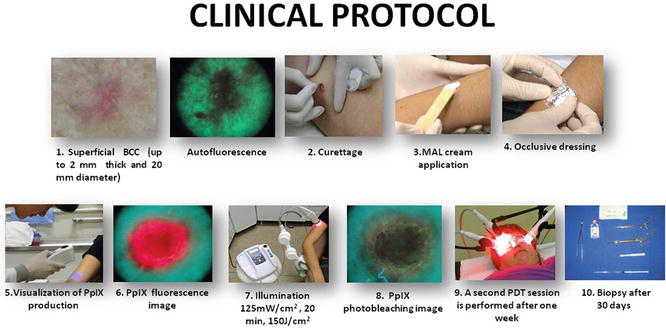
In this Brazilian program for the multicenter clinical trial, only BCC lesions up to 20 mm in diameter and 2 mm in depth are included, and the resumed MAL-PDT protocol is presented at Fig. 1. It is interesting to note that the established protocol uses a fluorescence-guided treatment, which has shown to allow an optimized result.
ALA and MAL Production
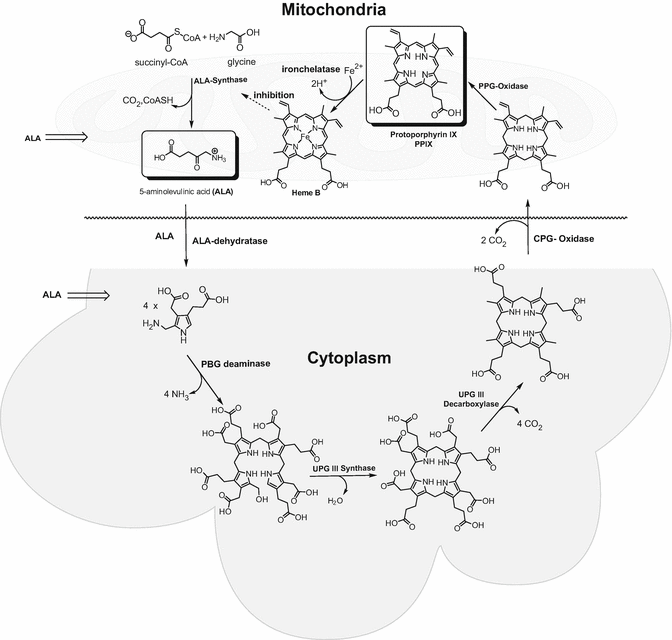
As mentioned before, 5-aminolevulinic acid hydrochloride (ALA) and their ester derivatives such as methyl 5-aminolevulinate hydrochloride (MAL) have occupied a special position in PDT treatments, not because they are photosensitizers, but because they are well-known direct biosynthetic precursors of protoporphyrin IX in cells which is the real photosensitizer with ALA derivatives. Basically, when ALA or their ester derivatives are used as topical cream formulations, a protoporphyrin IX accumulation is observed after 1–2 h, thus allowing the use of local PDT treatments by red light (630 nm) (Kennedy et al. 1990). The biosynthetic mechanism of production and accumulation of protoporphyrin IX is currently well established wherein the excess of ALA inside the cells can also promote an inhibition of some steps for heme production, thus resulting in a protoporphyrin IX localized accumulation (Fig. 2) (Kennedy et al. 1990).
This alternative method was introduced in the literature in 1990 by Kennedy and coworkers (Kennedy et al. 1990), and an outstanding increase in PDT indications has been developed since this discovery. It is important to highlight that this treatment allowed the possibility to perform many local treatments with only localized photosensitivity instead of the overall skin and ocular photosensitivity caused by systemic administrations. Many scientists consider the local photosensitivity as one of the main advantages of this technique; however, the most important is the safety of the treatments. Systemic drugs may cause side effects, since complex issues are involved. A number of protocols should be considered before a new systemic drug is designated as an approved medicine, in which not only the effects of drug have to be studied but also the effect of metabolites, the population variability, and many other factors.
Definitively, ALA-PDT has the potential to act against many bacterial, fungal, precancer lesions, BCC, condyloma by human papillomavirus virus (HPV), and cervical intraepithelial neoplasia, as well as a fluorescent marker in cancer diagnosis (Tetard et al. 2014; Gold and Goldman 2004; Fotinos et al. 2006). Another growing field for applications of ALA-PDT is the dermatology. In fact, PDT is essentially a technique for causing cellular damage. Therefore, the use of ALA in dermatology is well established since many inflammatory processes can be treated, thus selectively eliminating the abnormal cells and also killing pathogen microorganisms present in dermal infections.
Over the last 25 years, the ALA-PDT protocols have definitively proven to be useful for many treatments; therefore, the main question we have is: Why is ALA-PDT not a routine treatment in hospitals and clinics?
This is a highly complex question to address since many factors are involved. Economically, ALA therapies may involve millions of US dollars, which correspond to a large market. On the other hand, for many years, big pharmaceutical companies have systematically worked to develop systemic drugs and have spent millions of USD on research involving anticancer drugs (chemotherapeutical), and someone has to pay the bill. However, it is most important to convince the edge of the pyramid (the doctors) that PDT treatments present several advantages and can contribute to improve health around the world. As the pharmacist is directly responsible for promoting free medicine into the pharmacy, for example, vitamins and energy supplements, the doctors are also pivotal for the diffusion and success of PDT, and they should be the first ones convinced that PDT is in fact effective. However, once, again it is not an easy assignment and involves many issues.
Fortunately, the diffusion of PDT treatments has grown around the world, and Brazil has figured out very useful contributions in this field. A successful example is the work developed by Optics and Photonics Research Center (CEPOF) located at the University of São Paulo in São Carlos City and also by two Brazilian associated companies, namely, PDT Pharma and MMOptics. The MMOptics started many years ago manufacturing optical devices, and PDT Pharma is the youngest initiative in Latin America working with the synthesis of photosensitizers and photomedicines (Fig. 3). Both companies are currently committed to establish protocols and commercial solutions involving mutually the photomedicine cream and the light device.
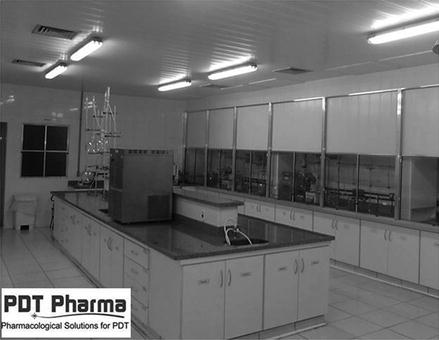
One of the main challenges for both companies is to turn this technology attractive considering PDT costs, and it has meant a number of investment and work. The PDT Pharma was born as a spin-off company due to the need of a provider which could allow the offering of ALA and their derivatives with a feasible price and considering the Latin America economical reality. The first challenge was to establish a facility to synthesize ALA and their derivatives fulfilling all the pharmaceutical requirements, from the active pharmaceutical ingredient (API) production until the formulation of a new cream, both respecting all the patent issues and the international protected marked. Since then, almost 7 years were spent, and according to information from the PDT Pharma company, in the beginning of 2017, a full solution will be technically available for the market.
The PDT Pharma example is very useful to illustrate the discussion established before where we mentioned the difficulty to make the PDT treatments more popular and accessible for the people due to the bureaucracy and also economical barriers. Obviously, as scientists we also completely understand all the market issues and the business market size which systemic drugs can mean, and the objectives of the PDT team/companies are by far to fight against it. In this case it is important to mention that both companies are devoted to make the PDT closer to the people that need health assistance, thus allowing alternative solutions especially for public health consumers.
PDT Device Development
To the best of our knowledge, the LINCE (MMOptics, São Carlos, Brazil) was the first commercial system available for PDT with a wide-field fluorescence visor and illumination probe combined in the same device (Fig. 4). The development of this device was performed by our group at the University of São Paulo and MMOptics financed by the Brazilian Funding Authority for Studies and Projects (FINEP, Financiadora de Estudos e Projetos), a government federal organization of the Ministry of Science, Technology and Innovation.
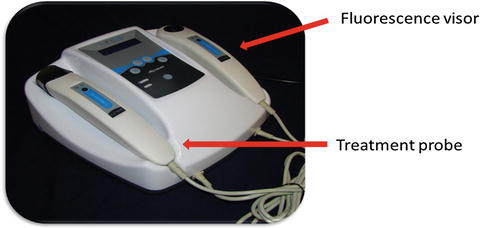
The main technical characteristics of the PDT system are presented at Table 1. LINCE is a portable device that has two probes, one for fluorescence visualization and another for the PDT illumination. Both probes have LED-based light sources, and optical components to provide a uniform illumination area. The system contains a photodetector in the front panel for the irradiance checking and an electronic visor and push buttons for the irradiance and illumination time selection.
| Equipment | |
|---|---|
| Input voltage | 100–240 V/50–60 Hz |
| Electric classification (EN 60601-1) | Class II, type B |
| Operating mode: treatment probe | Continuous |
| Operating mode: evidencer probe (fluorescence) | Intermittent (on, 15 min) or (off, 2 h) |
| Treatment LED spot diameter | (20 ± 2) mm |
| Fluorescence LED spot diameter | (20 ± 2) mm |
| Treatment LED wavelength | (630 ± 10) nm |
| Fluorescence LED wavelength | (400 ± 10) nm |
| Treatment LED irradiance levels | 50, 75, 125, and 150 mW/cm2 ± 20% |
| Fluorescence LED irradiance | Maximum at 40 mW/cm2 ± 20% |
| Protection goggles | 1 (evidencer), 2 (treatment) |
One of the main limitations of the use of ALA or MAL as a topical prodrug is the variability of production of protoporphyrin IX (PpIX) as a result of the surface and metabolic differences of the tumor lesions. As a consequence, the resulted PpIX production may be highly heterogenous, resulting in an overall ineffective PDT response. There is no way to predict the adequate PpIX concentration and distribution within the tumor, but the monitoring of the tissue fluorescence can be used to indirectly detect the presence of the PpIX. The skin autofluorescence shows a higher emission at the green spectrum, the cancer lesion shows a decreased autofluorescence, and the PpIX emits a red fluorescence. The possibility to qualitatively assess the production of PpIX is a great advantage for the medical doctor to evaluate if this PDT step has been adequately taken place. If there is no PpIX production after the cream incubation time or if it is heterogenous, the resulted photodynamic response will be poor. In this case, the medical doctor should reevaluate the lesion preparation or even the further illumination.
Another relevant clinical information that can be obtained using the wide-field fluorescence imaging is the analysis of the resulted photobleaching after the completion of the illumination exposure (Fig. 1, steps 6 and 8). This is a qualitative evaluation of the induced photodynamic reaction since there is a direct correlation between the PpIX photobleaching and the production of the singlet oxygen. The PpIX photobleaching can be assessed by the decreased red fluorescence when compared to the before illumination red emission.
Overall Partial Results of the Multicenter Study
From the beginning of the PDT applications in this present multicenter clinical trial in March 2011 until June 2015, around 4,000 BCC lesions were treated using the proposed protocol. This database is constantly updated with the partial reports from the PDT units. Partial results have been already published (Ramirez et al. 2014; Blanco et al. 2015; Buzzá et al. 2016), but the main results evaluated until now demonstrate that the investigated MAL-PDT protocol is effective for over 85% of the treated lesions (complete tumor response in a punch biopsy at 30 days after treatment). One important feature was observed when considering the complete response rate; when the PDT was performed by an experienced dermatologist, the rates could reach 95%, but for the ones that had no previous experience, the achieved rates were lower. Our hypothesis, based on the analysis of the treated cases, is that the experienced doctors are more restricted on the MAL-PDT indication, since they already know which lesions will respond better. This fact points out the relevance on the training as well as on a closer follow-up of the medical team, especially to discuss the lesion selection.
There was only one report of an unexpected side effect where one patient with a lesion at the nose showed a moderate/severe inflammatory condition after the first PDT session, which was controlled with a topical corticosteroid cream, but prevented the second session at the seventh day.
On the PDT center at the Amaral Carvalho Hospital, a double-blind study comparing the treatment efficacy of ALA-PDT, MAL-PDT, and surgery has been performed in 600 patients. The clinical steps were completed; the results are under analysis and will be presented in a scientific paper.
Non-oncological Protocols
In order to evaluate the efficacy of the photodiagnosis and PDT for the treatment of potentially malignant lesions, but also to develop protocols for local microorganism inactivation in infected lesions, other research and instrumentation development was also performed. Examples of targeted potentially malignant lesions are condyloma acuminatum by human papillomavirus (HPV) in women (Inada et al. 2012) and actinic cheilitis (Takahama et al. 2013), and ongoing clinical trials are for cervical intraepithelial neoplasia (CIN), actinic keratosis, and field cancerization.
Considering photodynamic therapy for infectious diseases, our group and collaborators have been investigating and determining protocols for onychomycosis (Silva et al. 2013), denture stomatitis (Mima et al. 2011), pythiosis (Pires et al. 2012, 2014), pharyngitis, and infected cutaneous ulcers.
Final Considerations
Photodynamic therapy has been showing effective results for the local treatment of cancer and infected lesions. Even though, PDT presents several advantages when compared to surgical resection for the treatment of superficial BCC, its widespread use has been prevented due to limitations mainly considering the involved costs of the illumination equipment and photomedicine compound. In Brazil, through a national program funded by BNDES (Brazilian Development Bank), scientists, clinicians, and technological companies could work together to establish a multicenter clinical study. The achieved results showed that the PDT protocols have similar response when compared to literature presented with foreign drug and devices. Analyzing the results and comparing the established centers, it was possible to infer the relevance of the training of the medical team, as well as a closer monitoring of the non-experienced teams. The proper indication of the MAL-PDT was the main factor contributing to the higher complete response rates, which was mostly observed at the centers with indicated previous experience with PDT. This program resulted in the implementation of 70 PDT centers, including the ones in low setting clinical facilities.
Take Home Messages
- The Brazilian program to implement PDT centers, using national technology, is presented.
- A clinical MAL-PDT protocol was tested in 70 centers for the treatment of superficial BCC.
- The illumination device has a dual platform, a wide-field fluorescence visor and an illumination probe, both LED-based light sources.
- Tumor complete response was of 90% in experienced teams and around 65% for the teams without any previous experience on PDT. The uncorrected indication of some lesions was the main factor attributed to this lower response.
Acknowledgments
The authors greatly acknowledge the financial support provided by BNDES and FINEP; the partnership with MMOptics and PDT Pharma; the institutional support of the University of São Paulo, Federal University of São Carlos, and Amaral Carvalho Hospital; and our Brazilian team of researchers and graduate students that were intensively committed to make this program real: Ana Gabriela Salvio, Natalia Mayumi Inada, Lilian Tan Moriyama, José Dirceu Vollet-Filho, Clovis Grecco, Dora Patricia Ramirez, Kate Cristina Blanco, Hilde Harb Buzzá, Cintia Teles Andrade, Layla Pires, Ana Paula Silva, Mirian Stringasci, Daniel Bonini, Ana Elisa Serafim Jorge, Mariana Torres Carvalho, and Sebastião Pratavieira. Special thanks also for the technicians of the partner companies, Luiz Antonio de Oliveira, Anderson Zanchin, and Rodrigo Costa e Silva.
References
Andrade CT, Vollet-Filho JD, Salvio AG, Bagnato VS, Kurachi C. Identification of skin lesions through aminolaevulinic acid-mediated photodynamic detection. PD PDT. 2014;11:409–15. doi:10.1016/j.pdpdt.2014.05.006.
Bagnato VS, Kurachi C, Ferreira J, Marcassa LG, Sibata CH, Allison RR. PDT experience in Brazil: a regional profile. PDD PDT. 2005;2:107–18.
Blanco KC, Moriyama LT, Inada NM, Salvio AG, Menezes PFC, Leite EJS, Kurachi C, Bagnato VS. Fluorescence guided PDT for optimization of the outcome of skin cancer treatment. Front Phys. 2015;3:30. doi:10.3389/phy.2015.00030.
Buzzá HH, Silva AP, Vollet-Filho JD, Ramirez DP, Trujillo JR, Inada NM, Moriyama LT, Kurachi C, Bagnato VS. Photodynamic therapy: progress toward a scientific and clinical network in Latin America. Photodiagn Photodyn Ther. 2016. doi:10.1016/j.pdpdt.2015.08.004.
Ferreira J, Kurachi C, Moriyama LT, Menezes PFC, Perussi JR, Sibata C, Zucoloto S, Castro-e-Silva Jr O, Bagnato VS. Correlation between the photostability and photodynamic efficacy for different photosensitizers. Las Phys Lett. 2006;3(2):91–5. doi:10.1002/lapl.200510057.
Ferreira J, Moriyama LT, Kurachi C, Sibata C, Castro-e-Silva Jr O, Zucoloto S, Bagnato VS. Experimental determination of threshold dose in photodynamic therapy in normal rat liver. Las Phys Lett. 2007;4(6):469–75. doi:10.1002/lapl.200710014.
Fotinos N, Campo MA, Popowycz F, Gurny R, Lange N. 5-aminolevulinic acid derivatives in photomedicine characteristics application and perspectives. Photochem Photobiol. 2006;82:994–1015.
Gold MH, Goldman MP. 5-aminolevulinic acid photodynamic therapy: where we have been and where we are going. Dermatol Surg. 2004;30:1077–83.
Hu Y, Huang X, Lu S, Hamblin MR, Mylonakis E, Zhang J, Xi L. Photodynamic therapy combined with terbinafine against chromoblastomycosis and the effect of PDT on Fonsecaea monophora in vitro. Mycopathol. 2015;179:103–9. doi:10.1007/s11046-014-9828-3.
Inada NM, Costa MM, Guimarães OCC, Ribeiro ES, Kurachi C, Quintana SM, Lombardi W, Bagnato VS. Photodiagnosis and treatment of condyloma acuminatum using 5-aminolevulinic acid and homemade devices. PD PDT. 2012;9:60–8. doi:10.1016/j.pdpdt.2011.09.001.
Issa MCA, Piñero-Maceira J, Vieira MTC, Olej B, Mandarim-De-Lacerda CA, Luiz RR, Manela-Azulay M. Photorejuvenation with topical methyl aminolevulinate and red light: a randomized, prospective, clinical, histopathologic, and morphometric study. Dermatol Surg. 2010;36:39–48. doi:10.1111/j.1524-4725.2009.01.385x.
Kennedy JC, Pottier RH, Pross DC. Photodynamic therapy with endogenous protoporphyrin IX: basic principles and clinical experience. J Photochem Photobiol B. 1990;6:143.
Lehmann P. Methyl aminolaevulinate-photodynamic therapy: a review of clinical trials in the treatment of actinic keratoses and nonmelanoma skin cancer. Brit J Dermatol. 2007;156:793–801. doi:10.1111/j.1365-2133.2007.07833.x.
LINCE (Light in Cell) Evidence photodynamic therapy. Instructions for use, 2011. MMOptics at eng.mmo.com.br.
Ma Y, Liu Y, Wang Q, Ren J, Xiang L. Prospective study of topical 5-aminolevulinic acid photodynamic therapy for the treatment of severe adolescent acne in Chinese patients. J Dermatol. 2015;42:504–7. doi:10.1111/136-8138.12836.
Melo CAS, Kurachi C, Grecco C, Sibata CH, Castro-e-Silva O, Bagnato VS. Pharmacokinetics of photogem using fluorescence monitoring in Wistar rats. Photochem Photobiol B. 2004;73:182–8.
Mima EWGO, Pavarina AC, Silva MM, Ribeiro DG, Vergani CE, Kurachi C, Bagnato VS. Denture stomatitis treated with photodynamic therapy: five cases. Oral Surg Oral Med Oral Pathol Oral Radiol Endod. 2011;112:602–8. doi:10.1016/j.tripleo.2011.05.019.
Monfrecola G, Procaccini EM, Bevilacqua M, Manco A, Calabro G, Santoianni P. In vitro effect of 5-aminolaevulinic acid plus visible light on Candida albicans. Photochem Photobiol Sci. 2004;3:419–22. doi:10.1039/b3156.29j.
Morton CA, McKenna KE, Rhodes LE. Guidelines for topical photodynamic therapy: update. Brit J Dermatol. 2008;159:1245–66. doi:10.1111/j.1365-2133.2008.08882.x.
Pires L, Bosco SMG, Silva Jr NF, Kurachi C. Photodynamic therapy for pythiosis. Vet Dermatol. 2012;24:130–e30. doi:10.1111/j.1356-3164.2012.01112x.
Pires L, Bosco SMG, Baptista MS, Kurachi C. Photodynamic therapy in Pythium insidiosum – an in vitro study of the correlation of sensitizer localization and cell death. PLoS One. 2014;9(1):e85431. doi:10.1371/journal.pone.0085431.
Ramirez DP, Kurachi C, Inada NM, Moriyama LT, Salvio AG, Vollet-Filho JD, Pires L, Buzzá HH, Andrade CT, Grecco C, Bagnato VS. Experience and BCC subtypes as determinants of MAL-PDT response: preliminary results of a national Brazilian project. PD PDT. 2014;11:22–6. doi:10.1016/j.pdpdt.2013.11.001.
Resources indicatives, Brazilian Ministry of Health at http://tabnet.datasus.gov.br/cgi/deftohtm.exe?idb2012/e02.def. Accessed 8 May 2015.
Sakamoto FH, Izikson L, Tannous Z, Zurakowski D, Anderson RR. Surgical scar remodeling after photodynamic therapy using aminolevulinic acid or its methylester: a retrospective, blinded study of patients with field cancerization. Brit J Dermatol. 2012;166:413–6. doi:10.1111/j.1365-2133.2011.10576x.
Silva AP, Kurachi C, Bagnato VS, Inada NM. Fast elimination of onychomycosis by hematoporphyrin derivative-photodynamic therapy. PD PDT. 2013;10:328–30. doi:10.1016/j.pdpdt.2013.01.001.
Soini EJ, Hallinen T, Sokka A-L, Saarinen K. Cost-utility of first-line actinic keratosis treatments in Finland. Adv Ther. 2015;32:455–76. doi:10.10007/s12325-015-0211-7.
Souza CS, Felicio LBA, Bentley MV, Tedesco AC, Ferreira J, Kurachi C, Bagnato VS. Topical photodynamic therapy for Bowen’s disease of the digit in epidermolysis bullosa. Brit J Dermatol. 2005;153:672–4. doi:10.1111/j.1365-2133.2005.06783.x.
Souza CS, Neves ABS, Felicio LBA, Ferreira J, Kurachi C, Bagnato VS. Optimized photodynamic therapy with systemic photosensitizer following debulking technique for nonmelanoma skin cancers. Dermatol Surg. 2007;33:194–8. doi:10.1111/j.1524-4725.2006.33038x, 207.
Souza CS, Felicio LBA, Arruda D, Ferreira J, Kurachi C, Bagnato VS. Systemic photodynamic therapy as an option for keratoacanthoma centrifugum marginatum treatment. JEADV. 2009a. doi:10.1111/j.1468-3083.2008.02744.x.
Souza CS, Felicio LBA, Ferreira J, Kurachi C, Bentley MVB, Tedesco AC, Bagnato VS. Long-term follow-up of topical 5-aminolaevulinic acid photodynamic therapy diode laser single session for non-melanoma skin cancer. PD PDT. 2009b;6:207–13. doi:10.1016/j.pdpdt.2009.09.001.
Takahama Jr A, Kurachi C, Cosci A, Faustino ISP, Camisasca DR, Fontes KBFC, Pires FR, Azevedo RS. Usefulness of tissue autofluorescence imaging in actinic cheilitis diagnosis. J Biomed Opt. 2013;18(7):076023. doi:10.1007/JBO.18.7.076023.j.
Tetard MC, Vermandel M, Mordon S, Lejeune JP, Reyns N. Experimental use of photodynamic therapy in high grade gliomas: a review focused on 5-aminolevulinic acid. PD PDT. 2014;11:319–30. doi:10.1016/j.pdpdt.2014.04.004.
Zouboulis CC, Desai N, Emtestam L, Hunger RE, Ioannides D, Juhász I, Lapins J, Matusiak Ł, Prens EP, Revuz J, Schneider-Burrus S, Szepietowski JC, van der Zee HH, Jemec GBE. European S1 guideline for the treatment of hidradenitis suppurativa/acne inversa. JEADV. 2015;29:610–44. doi:10.1111/jdv.12966.