Laser on Hair Regrowth
Laser on Hair Regrowth
João Roberto Antonio, Carlos Roberto Antonio and Ana Lúcia Ferreira Coutinho Faculdade Estadual de Medicina, Hospital de Base de São José do Rio Preto, São Paulo, Brazil Faculdade de Medicina Estadual de São José do Rio Preto – FAMERP, São José do Rio Preto, SP, Brazil Instituto de Dermatologia Professor Rubem David Azulay do Hospital da Santa Casa da Misericórdia do Rio de Janeiro, Rio de Janeiro, Brazil Hospital de Base de São José do Rio Preto, São Paulo, Brazil
Abstract
Alopecia is a common disorder affecting more than half of the population worldwide. There is an urgent need to investigate alternative treatment options, while there are still a few therapeutic options for the different types of alopecia on the market. The photobiomodulation phenomenon followed by hair growth was first described in 1967 by Professor Endre Mester, a Hungarian physician, the pioneer of laser medicine. For decades, clinical studies have been conducted to evaluate the efficacy, mechanism of action, and risks of using low-level laser therapy – LLLT (collimated or non-collimated) – in different forms of hair loss as a further treatment option. This chapter will present the clinical studies conducted with LLLT on female pattern hair loss (FPHL), male pattern hair loss (MPHL), alopecia areata (AA), and chemotherapy-induced alopecia (CIA), investigated in several databases including PubMed, Google Scholar, Medline, Embase, and Cochrane. At the end of this chapter, the authors concluded that LLLT may be a promising treatment option for patients who do not respond to conventional treatments and who do not want to undergo hair transplantation. This technology appears to work better for some people than others. Factors predicting who will get the most benefit need to be determined. Larger, longer-term placebo-controlled studies are needed to confirm these findings and reinforce the efficacy of LLLT in those patients, generating, therefore, more consistent protocols.
Keywords LaserLow-level laser therapyLow-level light therapyPhotobiomodulationHair lossAlopeciaAndrogenetic alopeciaFemale pattern hair lossMale pattern hair lossAlopecia areataChemotherapy-induced alopecia
Introduction
The use of laser in dermatology was first assessed in the treatment of benign vascular tumors. However, it gained ground while proving clinical effectiveness and safety in the treatment of other dermatological conditions such as removal of pigmented lesions, tattoos, scars, and undesirable hairs and in photoaging treatment.
Laser therapy has become popular over the last years. The first report of the use of the laser for hair growth was carried out by Professor Endre Mester et al. in 1967, during an experimental observation. Investigators reported the hair regrowth in the epilated area exposed to a low-potency ruby laser, evaluated to demonstrate the potential carcinogenic effect on the shaved backs of guinea pigs (Mester et al. 1968). This finding triggered the interest not only in identifying which laser apparatus could give efficient clinical responses without risk but also in verifying which therapeutic mechanisms would be involved in those responses.
To understand the mechanism of action of laser in the hair regrowth process, mainly in the scalp, laser medicine experts have developed different lines of research in low-level laser therapy (LLLT) and hair loss disorders, with available data to date demonstrating efficacy.
LLLT could be distinguished from other forms of laser therapy by its use of low power and low density. Most low-level laser therapy devices operate at wavelength intervals between 600 and 1000 nm and use much less power than the amount requested to warm tissue (10 mW/cm2, 2–5 W/cm2) (Bouzari and Firooz 2006).
Recently, the use of low-level laser therapy (LLLT) has been proposed as an alternative therapy (mono or in combination) for hair loss to stimulate hair regrowth in alopecia: FPHL, MPHL, and AA. In the next paragraphs, experimental and clinical studies conducted with the use of LLLT in these conditions will be discussed.
Historical Data
In 1996, a team of researchers from Kuopio University, Finland, conducted a single-blind placebo-controlled study to assess and compare the effects produced by three different types of laser/light (He-Ne, InGaAl diode, noncoherent LED light) on hair blood flow. The study involved ten healthy male individuals. Two sessions were held, and the placebo (noncoherent LED light) was compared to the other two laser sources (He-Ne and InGaAl diode). Measurements were carried out by laser Doppler flowmetry. Results demonstrated that coherent laser sources were the only light sources able to produce vasodilation (Pöntinen et al. 1996).
In 2000, a study carried out by researchers from Harvard Medical University showed that volunteers exposed to ruby laser (694 nm) for hair removal and diode (800 nm), responders or nonresponders, presented some level of hair growth, thinner and without pigment, sometime after the procedure. The authors concluded that the changes observed depend on the type of laser and individual response (Lin et al. 2000).
Gerardo Moreno-Arias et al. (2002) reported a phenomenon called paradoxical hypertrichosis or terminalization or induction of terminal hair growth. The clinical finding was described as a rare but significant secondary effect present in patients with hirsutism who undertook intense pulsed light (IPL) treatment during a period from 3 to 6 months. As the authors argue, intense pulsed light would have the property of inducing latent hair follicles in non-treated areas located around treated areas (Moreno-Arias et al. 2002; Desai et al. 2010).
In a recent literature review made by Sophia Rangwala, paradoxical hypertrichosis rates range from 0.6% to 10% after low-energy laser therapies with almost all types of laser: XeCl excimer 308 nm, helium-neon (He-Ne), and fractional erbium glass fiber 1550 nm. The event is more frequent over the face and the neck of volunteers with darker skin color (phototypes III–IV), dark hair, and/or with coexisting hormone imbalance (Rangwala 2012).
Pili bigeminy appeared in four cases after alexandrite or ruby laser treatments, due to suboptimal fluencies insufficiently low to induce thermolysis but high enough to stimulate follicular growth. Although the face and neck seem to be the areas which are most sensitive to the hair growth induction effect, the sensitivity and response of the scalp under these conditions are not recognized (Ye et al. 1999).
Under some researchers’ perspective, laser phototherapy prolongs the duration of the anagen phase, stimulates the anagen reentry in telogen hair follicles, increases the proliferation rates of the anagen hair follicles, and prevents premature catagen development (Chung et al. 2004). There are many theories to explain the LLLT’s mechanism of action in hair loss, but it has not yet been fully elucidated (Karu 1989; Karu and Kolyakov 2005; Hawkins-Evans and Abrahamse 2008a, b; Lubart et al. 1992; Oliveira et al. 2008; Mognato et al. 2004; Karu 1987).
Although medical guidelines make special reference to LLLT clinical benefits in alopecia, it is important to reinforce the need for clinical studies of a better quality, randomized with an adequate number of volunteers (Kreisler et al. 2003; Kim et al. 2015; Avram and Rogers 2010; Stillman 2010).
Proposed Mechanisms: LLLT on Hair Growth
The LLLT has biomodulating effects on cells and tissues. These effects activate or inhibit physiological, biochemical, and metabolic processes through photophysical or photochemical effects and promote morpho-differentiation, cellular proliferation, tissue neoformation, revascularization, reduction of edema, increased cellular regeneration, microcirculation, and vascular permeability (Karu 1989; Karu and Kolyakov 2005; Hawkins-Evans and Abrahamse 2008a, b).
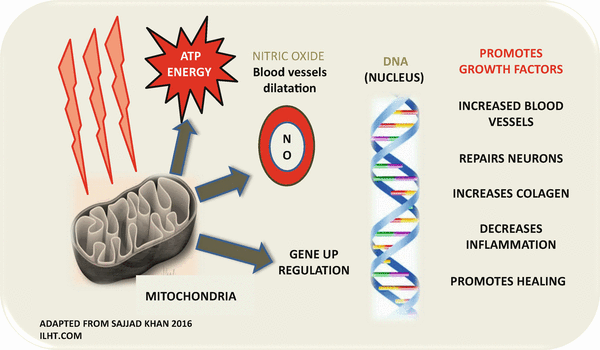
When laser therapy is used in the visible electromagnetic spectrum, there is an initial photobiostimulation in mitochondria, which activates a chain of biological events. When the irradiation is in the infrared spectrum, there is stimulation of the plasmatic membrane channels, resulting in changes in membrane permeability, temperature, and pressure gradient (Lubart et al. 1992; Oliveira et al. 2008; Mognato et al. 2004; Karu 1987).
Both visible and infrared light can be absorbed by different components of the cellular respiratory chain such as chromophores in cytochrome C oxidase or porphyrins, which results in the production of reactive oxygen species or superoxide radicals. It has been commented that reactive oxygen species have a fundamental role in increasing the proliferation of keratinocytes (Lubart et al. 1992; Oliveira et al. 2008; Mognato et al. 2004; Karu 1987).
According to Mognato et al., the oxidation reaction seems to be associated with stimulation and proliferation, whereas the reduction reaction seems to be associated with inhibition of cell growth (Mognato et al. 2004).
Kreisler et al. (2003) emphasized that there is a stimulation of photoreceptors in the mitochondrial respiratory chain. After the laser light has been absorbed, photophysical and photochemical effects, isolated or combined, stimulate the mitochondrial membrane, increasing the membrane potential and, consequently, changing the mitochondria’s properties. LLLT acts on the mitochondria and may alter cell metabolism through photodissociation of inhibitory nitric oxide (NO) from cytochrome C oxidase (CCO), resulting in an increased production of molecular oxygen and ATP, which stimulates the activity of DNA and RNA to synthesize regulatory proteins of the cell cycle, and thus the speed of mitosis can be increased (Kim et al. 2015; Avram and Rogers 2010; Stillman 2010). Moreover, NO is known to be a potent vasodilator via its effect on cyclic guanine monophosphate production, and it can be speculated that LLLT may cause photodissociation of NO not only from CCO but also from intracellular stores such as nitrosylated forms of both hemoglobin and myoglobin leading to vasodilation and increased blood flow which was reported in several studies (McElwee 2012; Chung et al. 2012).
According to Stein et al. (2005), laser therapy induces the phosphorylation of MAPK/ERK protein kinases in cells, which are known to be associated with the mechanism of cell proliferation. It is worth noting that the interaction of laser light with tissues can lead to different results (stimulation or inhibition) depending on several factors, such as wavelength, dose, power, time, number of irradiations, optical properties of tissues, and type of irradiated cell, besides the physiological characteristics of the cells at the time of irradiation.
In fact, the magnitude of the cellular response to irradiation depends on the physiological state of the cell (the amount of nutrients available and the age of the cell culture). Generally, cells in the exponential phase of growth are more photosensitive than those in the stationary phase of growth (Avram and Rogers 2010; Stillman 2010; McElwee 2012; Chung et al. 2012; Stein et al. 2005; Karu 1988) (Fig. 1).
LLLT in Chemotherapy-Induced Alopecia (CIA)
In 2003, a nonclinical study was conducted focusing on assessing the use of low-level laser therapy in guinea pigs (rodents) which presented chemotherapy-induced alopecia (CIA), considering that there was no efficient approach to this type of alopecia.
HairMax LaserComb, a low-level laser device, was used, whose application had already been authorized by the FDA for androgenetic alopecia treatment. Throughout the study, traditional chemotherapeutical agents were used, cyclophosphamide, etoposide, or a combination of cyclophosphamide and doxorubicin, to induce alopecia in young rats with or without low-level laser therapy (LLLT). As expected, after 7–10 days of chemotherapy, all rats developed complete corporeal alopecia. However, the rats which had been submitted to low-level laser therapy recovered their natural state, with hair growth around 5 days earlier than those submitted only to chemotherapy without LLLT exposure. Hair growth in rats treated with laser was confirmed by histological study.
Results showed that low-level laser treatment accelerated significantly hair growth after CIA, without affecting chemotherapy efficiency, concerning the guinea pig model used for that study (Wikramanayake et al. 2013).
LLLT in Androgenetic Alopecia (AGA)
Androgenetic alopecia (AGA) is one of the most common chronic problems seen by dermatologists worldwide, characterized by progressive hair loss, especially of scalp hair. It has distinctive patterns of loss in women versus men, but in both genders the central scalp is most severely affected.
It often begins around puberty and is known to affect self-esteem and the individual’s quality of life. In contrast to the high prevalence of AGA, approved therapeutic options are limited. In addition to the scarce pharmacologic treatments, there are numerous nonprescription products claimed to be effective in restoring hair in androgenetic alopecia.
Low-intensity laser therapy or photobiomodulation or photobiostimulation was approved by the US Food and Drug Administration (FDA) in 2007 with a safe approach to the treatment of male and female androgenetic alopecia. From then on, a series of devices designed for domestic use (daily or many times a week) became available on the market, relatively cheap if compared to medical treatment and hair transplant surgery.
Although the mechanism of action of these devices in androgenetic alopecia treatments is still not clear, some controlled clinical studies show visible hair growth.
Different types of laser have been studied during the assessment of hair growth in androgenetic alopecia, including XeCl excimer 308 nm, helium-neon (He-Ne), and fractional erbium glass fiber 1550 nm (Blumeyer et al. 2011; Tsuboi et al. 2012; van Zuuren et al. 2012; Zarei et al. 2016; Jimenez et al. 2014; Leavitt et al. 2009; Wikramanayake et al. 2009; Avram et al. 2007; Kim et al. 2011; Kobielak et al. 2013; Kandyba and Kobielak 2013; Kandyba et al. 2013; Kobielak et al. 2003, 2007; Lee et al. 2011) (see Table 1).
| Home devices | Power | Treatment regimes | Studies | Subjects | Results | Peer reviewed? |
|---|---|---|---|---|---|---|
| Capillus™ 82 Laser Cap | 410 mW | 30 min, 3–4×/week | Double-blind RCT | 44F | 63.7% increase in terminal hair count vs sham | No |
| Capillus™ 202 Laser Cap | ||||||
| Capillus™ 272 Pro Laser Cap | ||||||
| HairMax™ Laser Band 41 | 205 mW | 3 min, 3×/week | Prospective cohort | 28M, 7F | Total hair count and hair tensile strength increased | Yes (Satino) |
| HairMax™ Laser Band 82 | 410 mW | 90 s, 3×/week | Double-blind RCT | 110M | Mean terminal hair density increased by ~20 hairs/cm2 | Yes (Leavitt) |
| HairMax™ Prima 7 LaserComb | 35 mW | 15 min, 3×/week | Case report | 2M | No significant change in hair count or thickness | Yes (Rushton) |
| HairMax™ Ultima 9 LaserComb | 45 mW | 15 min, 3×/week | Retrospective cohort | 11M, 21F | Global photos – majority with moderate improvement | Yes (Munk) |
| HairMax™ Ultima 12 LaserComb | 60 mW | 8 min, 3×/week | Double-blind RCT | 128M, 141F | Terminal hair density increased by ~15 hairs/cm2 | Yes (Jimenez) |
| iGrow™ Hair Growth System | 255 mW | 25 min, every other day | Double-blind RCT | 41M | 35–37% increase in terminal hair count | Yes (Lanzafame) |
| Double-blind RCT | 42F | |||||
| iRestore™ Hair Growth System | 255 mW | 25 min, every other day | Double-blind RCT | 18M, 18F | Pending, study in progress | N/A |
| Lasercap™ LCPRO | 1120 mW | 36 min, every other day | Case series | 7F | Improvement in hair volume and shine | N/A |
| Case series | 1M, 2F | |||||
| NutraStim™ Laser Hair Comb | 60 mW | 8 min, 3×/week | N/A | N/A | N/A | N/A |
| Theradome™ LH80 PRO | 400 mW | 20 min, 2×/week | Double-blind RCT | 80M | Pending, study in progress | N/A |
The HairMax LaserComb (Lexington International, Florida), a 3R class laser (safety level), was evaluated in androgenetic alopecia in a multicenter, double-blind controlled study (against a non-active device). The clinical trial was performed in four centers and assessed 110 men with male AGA (Norwood-Hamilton: IIa–V, Fitzpatrick: I–IV) aged between 30 and 60 years (Jimenez et al. 2014).
The study subjects were instructed to use the device three times a week, during 15 min, over 26 weeks. The sites for application were marked with a circular tattoo, 2.96 cm in diameter, which was assessed after haircut. By means of computerized counting, the scalp was evaluated via macroimage.
The study subjects treated with the laser comb (655 nm) showed an increase in density of around 19.8 hairs/cm2 in comparison to 7.6 hairs/cm2 presented by the control group (P < 0.0001). No statistical improvement was observed in the investigator’s overall evaluation.
In 2014, another group of researchers published a double-blind, randomized, controlled, multicenter study which had been performed to assess the clinical efficacy and safety of the same device in women and men with androgenetic alopecia.
A hundred and forty-one female volunteers (n = 141) and a hundred and twenty-eight male volunteers (n = 128) were randomized to receive the active device LaserComb or sham device (control) according to the following design: #1 with 9 beams vs control, #2 with 12 beams vs control, #3 with 7 beams vs control, and #4 with 12 beams vs control.
The application all over the scalp was performed three times a week throughout 26 weeks. Terminal hair density in the targeted area was assessed at the beginning and in the 16th and 26th weeks of the follow-up.
Both investigators and study subjects remained blind to the type of device used during the test. The specialist responsible for evaluating the digital pictures taken along the trial also remained blind to each branch of the study.
At the end of the study, the investigators observed an increase statistically significant in terminal hair density for subjects treated with the active device against those treated with the sham device (control).
No serious adverse events have been reported. According to the authors, these results suggest that LLLT might be an efficient option for hair loss regarding both male and female patterns. However, the researchers recognized that the mechanism by which LLLT converts telogen into anagen follicles remains unknown.
Avram and Rogers conducted the first independent blinded study of LLLT and hair growth with seven volunteers and found that on average, there was a decrease in the number of vellus hairs, an increase in the number of terminal hairs, and an increase in shaft diameter. Nevertheless, these data were not considered statistically significant (Avram et al. 2007).
The first study involving a fractional erbium glass fiber 1550 nm (Mosaic, Lutronic Co., Ltd., Seoul, South Korea) published is a nonclinical assay carried out in 2011. The investigators evaluated the effect of the device on the hair cycle in a form of alopecia in rats. The radiation was applied over the shaved skin of C3H/HeN rats using various power and density configurations in different radiation intervals. Stimulation effects on hair were observed due to the level of power employed, density, and radiation interval. Histologic findings reveal the conversion of hair in telogen phase into anagen phase. The conversion into anagen hair and the increase of Wnt5a, β-catenin were regarded as signs of therapeutic response.
Later, to assess the clinical effects of that same sort of laser, a study was performed involving 20 males with AGA (Kim et al. 2011). In the study involving humans, 20 male volunteers were treated in five sessions at 2-week intervals. A power of 5 mJ was used, with a total density of 300 spots/cm2. According to the investigators, a fractional laser can cause thermal injury or photothermolysis for each thermal microzone (TMZ), which induces collagen regeneration and thermal shock over proteins. Both events lead to the expression of growth factors, including vascular endothelium growth factor (VEGF), which induces neoangiogenesis. Other possible mechanisms are cytokine biomodulation and growth factors such as PDGF, KGF, and IGF.
Nowadays, it is known that there is a complex network of genes involved in the control of the hair growth cycle and connected to Wnt and BMP signaling pathways, especially the Wnt7 gene, which causes inadequate hair growth if inactivated. Research data have already proved that, if BMP signaling pathways are reduced and Wnt pathways are increased, a hair growth phase is activated (Kobielak et al. 2013; Kandyba and Kobielak 2013; Kandyba et al. 2013; Kobielak et al. 2003, 2007).
During the study, incremental improvements in hair density and hair growth rate were observed, which suggested that fractional erbium glass fiber 1550 nm might induce hair growth.
In that same year (2011), the investigators evaluated the fractional erbium glass fiber 1550 nm effect on female pattern alopecia (Lee et al. 2011). Twenty-eight South Korean volunteers took part in the study. The volunteers received laser application at intervals of 15 min, following the same parameters of the study conducted with male volunteers. Phototrichograms and global photos were taken at the beginning and at the end of the treatment. Changes in density and in the hair shaft diameter were analyzed. The global photos were evaluated by three independent dermatologists using a scale of seven points. The volunteers involved also answered an efficacy self-evaluation questionnaire. All adverse events were reported during 5 months of treatment.
After 5 months of study, the results demonstrated an increase in hair density of 157 ± 28/cm2 (P < 0.0001) and in shaft thickness of 75 ± 13 μm (P < 0.001). According to the global photos, out of the remaining 27 volunteers, 24 (87.5%) showed an improvement in their conditions. Two volunteers (7.4%) reported moderate pruritus after laser application, which was spontaneously solved 2 hours later.
In 2013, a multicenter, double-blind, randomized, controlled study was performed to evaluate the efficacy and safety of LLLT in volunteers with androgenetic alopecia against a sham device, over 24 weeks, against a sham device (control).
The study involved 40 volunteers with androgenetic alopecia. One group of volunteers was exposed to a helmet-like apparatus, which produces radiation at wavelengths of 630, 650, and 660 nm, and the other group was exposed to a sham device (control) during 18 min per day.
A phototrichogram and overall evaluations were carried out. After 24 weeks, the results showed a significant increase in hair density in the group of volunteers exposed to the active apparatus (LLLT) against the other group (sham device). The average diameter of the hair shaft also increased significantly in the volunteers submitted to the intervention compared to the sham device group.
According to the investigator’s evaluation, a significant clinical improvement was observed in the group of volunteers exposed to the active apparatus. No adverse event was reported. In the investigators’ opinion, LLLT was considered effective and safe concerning AGA treatment (Kim et al. 2013).
LLLT in Alopecia Areata
Alopecia areata is an autoimmune disease which is characterized by rapid and complete hair loss in one or many sites in the form of patches, generally located on the scalp. Available treatments are employed with variable success. These include pulsed high doses of oral or intravenous steroids, topical high-potency steroids under occlusion, photochemotherapy, and topical immunotherapy. Efficacy of treatments in patients with alopecia totalis and alopecia universalis is poor, with long-term complete regrowth in less than 20% of patients (Tosti et al. 2006).
In 1984, Trelles and collaborators investigated He-Ne laser action in alopecia areata (Trelles et al. 1984), and, from 2002 on, a series of studies were undertaken to evaluate the role played by different forms of light/laser as an alternative therapy to the types of alopecia (particularly alopecia areata) (Shukla et al. 2010; Touma and Rohrer 2004).
In 2003, a study assessed the effects of polarized linear infrared radiation produced by a commercial device denominated Super Lizer in volunteers with alopecia areata. Fifteen volunteers over 18 years old diagnosed with alopecia areata and with multiple patches were engaged in this trial. Results showed that, out of 15 volunteers (46.7%), 7 presented hair growth in the radiated areas around 1.6 months earlier than those not radiated. Regarding the adverse events, only one patient complained about a heat sensation over the radiated area (Yamazaki et al. 2003).
The most explored laser in the treatment of alopecia areata is the XeCl excimer 308 nm, better established by a vast number of studies conducted even in children, proposing as its mechanism of action an apoptotic effect over T cells (Gundogan et al. 2004; Raulin et al. 2005; Al-Mutairi 2007, 2009; Ohtsuki et al. 2010, 2013; Byun et al. 2015).
In 2006, a study evaluated the efficacy of superpulsed Ga-As, 904 nm diode laser, in the treatment of alopecia areata. For this purpose, 16 volunteers with 34 alopecia areata patches refractory to other forms of therapy were selected. In each patient, there was a remaining patch without treatment as control lesion. Four sessions were held, one per week, with pulsed infrared diode laser (904 nm), pulse rate of 40/s. Photos were taken of each patient before and after the treatment, 11 being males (68.75%) and 5 females (31.25%). Concerning the volunteers’ age, there was a range between 4 and 50 years of age with an average of 26.6 ± SD 13.8. The disease duration varied between 12 months and 6 years with an average of 13.43 ± 18.34.
Results showed that hair regrowth was observed in 32 areas of alopecia (94%), whereas only two areas of alopecia did not show any response. On the alopecic patches, considered control, hair regrowth was not verified. On 29 patches (90.6%), terminal hair could be verified. Less pigmented vellus hairs have been observed on three patches (Waiz et al. 2006).
In responders, the effect was earlier detected: in 24 areas (75%) one week after the first session. At the end of the study, the researchers concluded that the pulsed infrared diode laser is an efficient therapy with a high success rate in volunteers with alopecia areata (patches) refractory to various modalities of treatment.
In 2009, a group of researchers from the Department of Dermatology of Chung-Ang University College of Medicine, Seoul, South Korea, reported the case of a 35-year-old man with several large-sized alopecia areata patches on the frontal region of the scalp refractory to different methods/drugs (minoxidil topical solution 5%, topical steroids, and intralesional corticosteroid injections). Non-ablative laser (fractional erbium glass fiber 1550 nm) applications were made once a week, during 24 weeks. A pulse energy of 10–15 mJ, with a density of 300 MTZ/cm2, was used in each application. Two applications were made in each session (Yoo et al. 2009).
The treatment was well tolerated, without any side effect reported. Firstly, hair growth was observed 1 month after the treatment was started. After 3 months, lesions were covered with terminal hair, mostly pigmented, in an average of 30–40%. Six months after the therapy began, new hair grew over all lesions. No relapse was reported during a 6-month clinical follow-up.
Regarding the LLLT’s mechanism of action on AA, researchers assumed that one or more factors among improved microvascular circulation, reduced inflammation, and increased cell energy in the form of ATP, working together, could explain the clinical benefits of LLLT on AA.
In conclusion, LLLT offers a safe and effective option as monotherapy or in combination with other conventional therapies for non-scarring alopecia, such as male and female pattern hair loss, chemotherapy-induced alopecia, and alopecia areata, with available data to date demonstrating efficacy. We must consider that, regardless of these good results, the establishment of more consistent protocols requires the conduction of randomized, double-blind, sham-device-controlled trials with an adequate number of volunteers and longer follow-up.
Authors Experience: Case Studies
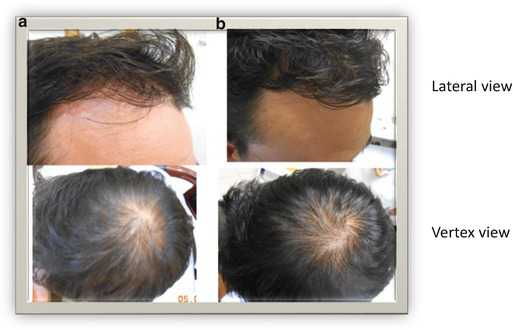
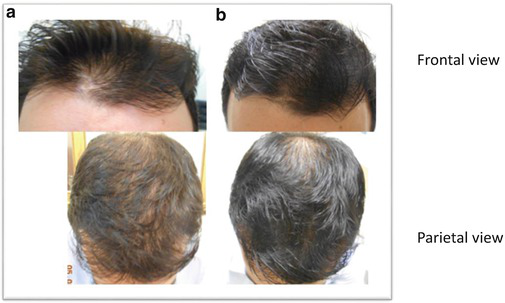
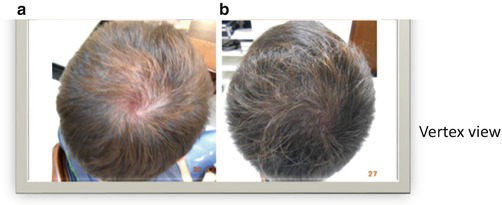
Our case studies (Figs. 2, 3, and 4) involving three patients with androgenetic alopecia treated with an erbium glass laser 1550 nm, energy of 8 mJ, density of 9%, making 6 applications over the areas affected by alopecia. One-month interval between sessions.
Take Home Messages
- LLL therapy offers a safe therapeutic option as monotherapy or in combination with other conventional therapies for non-scarring alopecia, taking into consideration the data available demonstrating efficacy to date.
- The interaction of laser light with tissues can lead to different results (stimulation or inhibition) depending on several factors: wavelength, dose, power, time, number of irradiations, optical properties of tissues, and type of irradiated cell, besides the physiological characteristics of the cells at the time of irradiation.
- There has been a rapid increase in market availability of devices each with differing characteristics, making both physician and patient/consumer navigation difficult.
- Further investigation is needed to compare the efficacy of LLLT devices, to be able to address patient needs and expectations.
References
Al-Mutairi N. 308-nm excimer laser for the treatment of alopecia areata. Dermatol Surg. 2007;33(12):1483–7.
Al-Mutairi N. 308-nm excimer laser for the treatment of alopecia areata in children. Pediatr Dermatol. 2009;26(5):547–50.
Avram MR, Rogers NE. The use of low-level light for hair growth: part I. J Cosmet Laser Ther. 2010;12(2):116.
Avram MR, Leonard RT Jr, Epstein ES, Williams JL, Bauman AJ. The current role of laser/light sources in the treatment of male and female pattern hair loss. J Cosmet Laser Ther. 2007;9(1):27–8.
Blumeyer A, Tosti A, Messenger A, Reygagne P, del Marmol V, et al. Evidence-based (S3) guideline for the treatment of androgenetic alopecia in women and in men. JDDG. 2011;9(Suppl. 6):S1–S57.
Bouzari N, Firooz AR. Lasers may induce terminal hair growth. Dermatol Surg. 2006;32:460.
Byun JW, Moon JH, Bang CY, Shin J, Choi GS. Effectiveness of 308-nm excimer laser therapy in treating alopecia areata, determined by examining the treated sides of selected alopecic patches. Dermatology. 2015;231(1):70–6.
Chung PS, Kim YC, Chung MS, Jung SO, Ree CK. The effect of low-power laser on the murine hair growth. J Korean Soc Plastic Reconstruct Surg. 2004;31:1–8.
Chung H, Dai T, Sharma SK, Huang YY, Carroll JD, Hamblin MR. The nuts and bolts of low-level laser (light) therapy. Ann Biomed Eng. 2012;40(2):516–33.
Desai S, Mahmoud BH, Bhatia AC, Hamzavi IH. Paradoxical hypertrichosis after laser therapy: a review. Dermatol Surg. 2010;36(3):291–8.
Gundogan C, Greve B, Raulin C. Treatment of alopecia areata with the 308-nm xenon chloride excimer laser: case report of two successful treatments with the excimer laser. Lasers Surg Med. 2004;34(2):86–90.
Hawkins-Evans D, Abrahamse H. Efficacy of three laser wavelengths for in vitro wound healing. Photodermatol Photoimmunol Photomed. 2008a;24(4):199–210.
Hawkins-Evans D, Abrahamse H. Efficacy of three laser wavelengths for in vitro wound healing. Photodermatol Photoimmunol Photomed. 2008b;24(4):199–210.
Jimenez JJ, Wikramanayake TC, Bergfeld W, Hordinsky M, Hickman JG, Hamblin MR, Lawrence A, Schachner LA. Efficacy and safety of a low-level laser device in the treatment of male and female pattern hair loss: a multicenter, randomized, sham device-controlled double-blind study. Am J Clin Dermatol. 2014;15:115–27.
Kandyba E, Kobielak K. Wnt7b is an important intrinsic regulator of hair follicle stem cell homeostasis and hair follicle cycling. Stem Cells. 2013;32(4):886–901.
Kandyba E, Hazen VM, Kobielak A, Butler SJ, Kobielak K. Smad1&5 but not Smad8 establish stem cell quiescence which is critical to transform the premature hair follicle during morphogenesis towards the postnatal state. Stem Cells. 2013;32(2):534–47.
Karu TI. Photobiological fundamentals of low-power laser therapy. J Quantum Electron. 1987;23(10):1703–17.
Karu TI. Molecular mechanisms of therapeutic effect of low intensity laser irradiation. Laser Life Sci. 1988;2(1):53–74.
Karu T. Photobiology of low-power laser effects. Health Phys. 1989;56(5):691–704.
Karu TI, Kolyakov SF. Exact action spectra for cellular responses relevant to phototherapy. Photomed Laser Surg. 2005;23(4):355–61.
Kim WS, et al. Fractional photothermolysis laser treatment of MPHL. Dermatol Surg. 2011;37:41–51.
Kim H, Choi JW, Kim JY, Shin JW, Lee SJ, Huh CH. Dermatol Surg. 2013;39(8):1177–83.
Kim TH, Kim NJ, Youn JI. Evaluation of wavelength-dependent hair growth effects on low-level laser therapy: an experimental animal study. Lasers Med Sci. 2015;30(6):1703–9.
Kobielak K, Pasolli HA, Alonso L, Polak L, Fuchs E. Defining BMP functions in the hair follicle by conditional ablation of BMP receptor IA. J Cell Biol. 2003;163(3):609–23.
Kobielak K, et al. Loss of a quiescent niche but not follicle stem cells in the absence of bone morphogenetic protein signaling. PNAS. 2007;104(24):10063–8.
Kobielak K, et al. Competitive balance of intrabulge BMP/Wnt signaling reveals a robust gene network ruling stem cell homeostasis and cyclic activation. PNAS. 2013;110(4):1351–6.
Kreisler M, Christoffers AB, Willershausen B, d’Hoedt B. Low-level 809 nm GaAlAs laser irradiation increases the proliferation rate of human laryngeal carcinoma cells in vitro. Lasers Med Sci. 2003;18(2):100–3.
Leavitt M, Charles G, Heyman E, Michaels D. HairMax LaserComb laser phototherapy device in the treatment of male androgenetic alopecia: a randomized, double-blind, sham device-controlled, multicentre trial. Clin Drug Investig. 2009;29(5):283–92.
Lee GY, Lee SJ, Kim WS. The effect of a 1550 nm fractional erbium-glass laser in female pattern hair loss. J Eur Acad Dermatol Venereol. 2011;25(12):1450–4.
Lin TY, Dierickx CC, Campos VB, Farinelli WA, Rosenthal J, Anderson RR. Reduction of regrowing hair shaft size and pigmentation after ruby and diode laser treatment. Arch Dermatol Res. 2000;292(2–3):60–7.
Lubart R, Wollman Y, Friedmann H, Rochkind S, Laulicht I. Effects of visible and near-infrared lasers on cell cultures. J Photochem Photobiol B Biol. 1992;12(3):305–10.
McElwee KJ, Shapiro JS. Promising therapies for treating and/or preventing androgenic alopecia. Skin Therapy Lett. 2012;17(6):1–4.
Mester E, Szende B, Gartner P. The effect of laser beams on the growth of hair in mice. Radiobiol Radiother. 1968;9(5):621–6.
Mognato M, Squizato F, Facchin F, Zaghetto L, Corti L. Cell growth modulation of human cells irradiated in vitro with low-level laser therapy. Photomed Laser Surg. 2004;22(6):523–6.
Moreno-Arias G, Castelo-Branco C, Ferrando J. Paradoxical effect after IPL photoepilation. Dermatol Surg. 2002;28(11):1013–6.
Ohtsuki A, Hasegawa T, Ikeda S. Treatment of alopecia areata with 308-nm excimer lamp. J Dermatol. 2010;37(12):1032–5.
Ohtsuki A, Hasegawa T, Komiyama E, Takagi A, Kawasaki J, Ikeda S. 308-nm excimer lamp for the treatment of alopecia areata: clinical trial on 16 cases. Indian J Dermatol. 2013;58(4):326.
Oliveira DAAP, Oliveira RF, Zangaro RA, Soares CP. Evaluation of low-level laser therapy of osteoblastic cells. Photomed Laser Surg. 2008;26(4):401–4.
Pöntinen PJ, Aaltokallio T, Kolari PJ. Comparative effects of exposure to different light sources (He-Ne laser, InGaAl diode laser, a specific type of noncoherent LED) on skin blood flow for the head. Acupunct Electrother Res. 1996;21(2):105–18.
Rangwala S, Rashid RM. Alopecia: a review of laser and light therapies. Dermatol Online J. 2012;18(2):3.
Raulin C, Gundogan C, Greve B, Gebert S. Excimer laser therapy of alopecia areata—side-by-side evaluation of a representative area. J Dtsch Dermatol Ges. 2005;3(7):524–6.
Shukla S, Sahu K, Verma Y, Rao KD, Dube A, Gupta PK. Effect of helium-neon laser irradiation on hair follicle growth cycle of Swiss albino mice. Skin Pharmacol Physiol. 2010;23:79–85.
Stein A, Benayahu D, Maltz L, Oron U. Low-level laser irradiation promotes proliferation and differentiation of human osteoblasts in vitro. Photomed Laser Surg. 2005;23(2):161–6.
Stillman L. Reply to: the use of low-level light for hair growth: part I. J Cosmet Laser Ther. 2010;12(2):116.
Tosti A, Bellavista S, Iorizzo M. Alopecia areata: a long-term follow-up study of 191 patients. J Am Acad Dermatol. 2006;55(3):438–41.
Touma DJ, Rohrer TE. Persistent hair loss 60 months after a single treatment with a 3-millisecond alexandrite (755 nm) laser. J Am Acad Dermatol. 2004;50(2):324–5.
Trelles MA, Mayayo E, Cisneros JL. Tratamiento de la alopecia areata con laser HeNe. Investigacion Y Clinica Laser. 1984;1:15–7.
Tsuboi R, Itami S, Inui S, et al. Guidelines for the management of androgenetic alopecia. J Dermatol. 2012;39:113–20.
van Zuuren EJ, Fedorowicz Z, Carter B. Evidence-based treatments for female pattern hair loss: a summary of a Cochrane systematic review. Br J Dermatol. 2012;167(5):995–1010.
Waiz M, Saleh AZ, Hayani R, Jubory SO. Use of the pulsed infrared diode laser (904 nm) in the treatment of alopecia areata. J Cosmet Laser Ther. 2006;8(1):27–30.
Wikramanayake TC, Rodriguez R, Choudhary S, Mauro LM, Nouri K, Schachner LA, Jimenez JJ, Leavitt M, Charles G, Heyman E, Michaels D. HairMax LaserComb laser phototherapy device in the treatment of male androgenetic alopecia: a randomized, double-blind, sham device-controlled, multicentre trial. Clin Drug Investig. 2009;29(5):283–92.
Wikramanayake TC, Villasante AC, Mauro LM, Nouri K, Schachner LA, Perez CI, Jimenez JJ. Low-level laser treatment accelerated hair regrowth in a rat model of chemotherapy-induced alopecia (CIA). Lasers Med Sci. 2013;28(3):701–6.
Yamazaki M, Miura Y, Tsuboi R, Ogawa H. Linear polarized infrared irradiation using Super Lizer is an effective treatment for multiple-type alopecia areata. Int J Dermatol. 2003;42(9):738–40.
Ye JN, et al. Pili bigeminy induced by low-fluence therapy with hair removal alexandrite and ruby lasers. Dermatol Surg. 1999;25(12):969.
Yoo KH, Kim MN, Kim BJ. Treatment of alopecia areata with fractional photothermolysis laser. 2009. Disponível em www.lutronic.com. Acesso em 11 July 2012.
Zarei M, Wikramanayake TC, Falto-Aizpurua L, Schachner LA, Jimenez JJ. Low level laser therapy and hair regrowth: an evidence-based review. Lasers Med Sci. 2016;31(2):363–71.