Ablative Radiofrequency in Cosmetic Dermatology
Ablative Radiofrequency in Cosmetic Dermatology
Tania Meneghel and Maria Letícia Cintra Clínica Renaissance, Americana, SP, Brazil Pathology Department, Medical Sciences School, Unicamp, Campinas, SP, Brazil
Abstract
In recent years, radiofrequency technology is being used in several medical skin care devices.
More precisely, the fractional micro-plasma radiofrequency technology was launched in 2007. It uses the radiofrequency electromagnetic radiation to get the plasma. The skin interaction with the plasma may cause heating, coagulation, vaporization, or ablation of the skin. This technology is non-chromophore dependent and can be used in high photo-types.
The fractional ablative lasers, mostly CO2 and erbium:YAG, are excellent for treatment of unaesthetic skin defects. However, they are not used for all types of skin and the CO2 in particular has a long downtime. The fractional micro-plasma radiofrequency is indicated for acne scars, chicken pox scars, atrophic scars, surgical scars, stretch marks (striae), fine lines and wrinkles, skin tightening, skin resurfacing, and skin rejuvenation (photo-aged skin). It is a safe, efficient treatment, with short downtime.
Keywords Micro-plasmaFractionalRadiofrequencySkin resurfacingScarsStriae
Introduction
The ablative fractional technologies are widely used in procedures to correct unaesthetic skin defects. Until recently CO2 was the main available treatment option (Tanzi et al. 2008; Alexiades et al. 2008). However it is contraindicated for high photo-types (V and VI) and it has a long downtime. The other alternative ablative fractional technology was erbium:YAG. It has a shorter downtime; however, its ablation is superficial, unable to stimulate the collagen accordingly. Both CO2 and erbium:YAG have water as their target chromophore.
Recently the population is worried with their physical appearance, perhaps because the world is more competitive. People have many activities and little time for themselves. Consequently, they are looking for efficient esthetics procedures, with short downtime. This explains the increasing trend in application of the ablative fractional technology. The fractional micro-plasma radiofrequency is independent of target chromophore (Kono et al. 2009). The erbium ablation is more superficial than CO2 or micro-plasma radiofrequency, but micro-plasma radiofrequency ablation is very similar to CO2, with shorter downtime (Gonzalez et al. 2008; Fitzpatrick et al. 2008).
Basic Concepts
Fractional Laser: The fractional laser emits light energy beams that turn into thermal energy and reaches the skin fractionally, causing micro-perforations (microthermal zones, MTZ). It provides minimal and controlled thermal damage, allowing the adjacent undamaged tissue, not reached by laser, to promote a rapid recovery of the treated areas (Manstein et al. 2004).
Ablation Lasers: The ablation lasers promote removal of the complete epidermis and a portion of the dermis.
Plasma: Plasma occurs when the gas is partially ionized and dissociated. It is usually obtained through electrical discharges in gases. The interaction of the plasma with the skin may result from a simple heating to vaporization or ablation and coagulation of the tissue, depending on the amount of energy used and the time the plasma remains in contact with skin (Fitzpatrick et al. 2008).
Radiofrequency: It is a type of electromagnetic energy. The fractional micro-plasma uses this type of energy to produce plasma.
History
In the beginning the use of plasma in skin care devices was unpredictable (Alster and Konda 2007). Because the technology was not fractionated, it was difficult to control the thermal and ablative damage. In August 2007, the fractional micro-plasma was developed, solving this issue.
Fractional Micro-plasma Characteristics
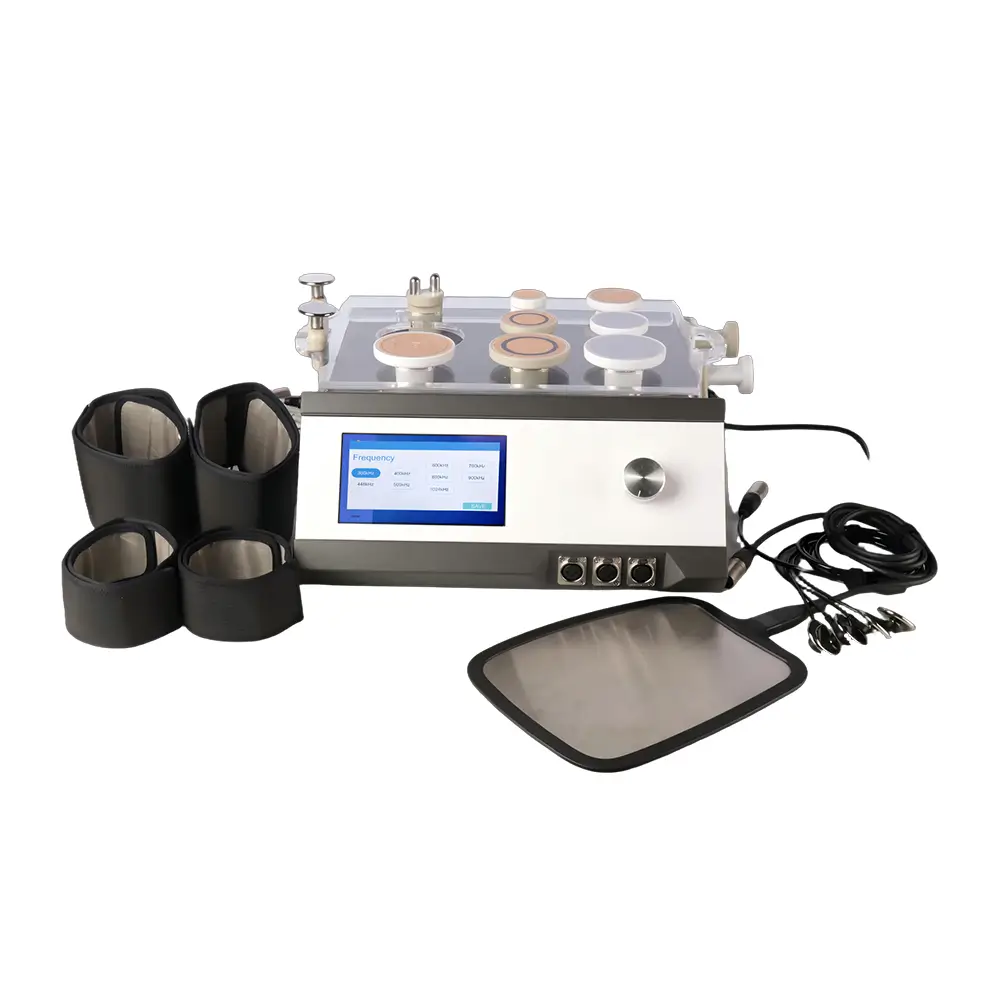
This technology is incorporated inside a special unipolar radiofrequency handpiece. The electromagnetic energy (unipolar radio frequency) produces ionization of the air between the tip and the skin, to provoke micro-plasma electrical sparks. These sparks cause ablation and create multiple controlled micro-perforations on the skin (microthermal zone) producing the thermal and ablation damage zone, surrounded by a healthy skin (Halachmi et al. 2010). This device can be used in stationary mode (stationary tip) or in motion (roller tip) (Figs. 1 and 2).
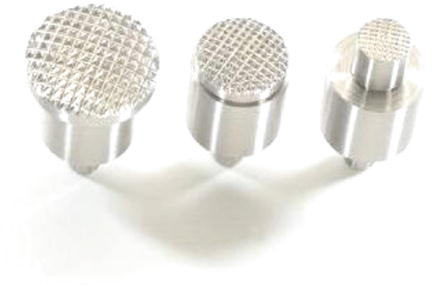
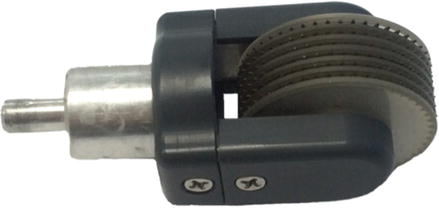
Perforations have 100–150 μm depth and 80–120 μm diameter (depending on the pulse duration and the power used) (Halachmi et al. 2010; Xiu et al. 2013). The parameters for the stationary mode are average power of 50 W, pulse duration from 0.1 to 0.3 s, and stack from one to five times. The tip with the smaller diameter and lower number of pins (large grate) is used for more aggressive effect. The number of stacks depends on the desired level of penetration, i.e., the greater the number of stacked passes, the greater the penetration. The lower tip with the same energy produces most thermal damage (Halachmi et al. 2010).
The parameters for the rotative tip depend on the skin photo-type:
- Photo-types I–III: average power from 45 to 60 W, with pulse duration between 6 and 30 s and two to seven passes
- Photo-types IV to V: average power from 40 to 50 W, with pulse duration between 6 and 30 s and two to seven passes
The number of passes depends on the desired level of penetration, i.e., the greater the number, the greater the penetration.
The treatment technique both for the stationary or the in motion application involves softly touching the surface of the skin with the tip. The applicator should not be pressed on the skin, but only touch it to obtain the ablative damage linked with the thermal damage. (If the tip is applied with too much pressure, the ablative damage is lost.) When the applicator is correctly positioned, it is possible to notice sparks on the skin, which produces the ablation effect.
Indications
This technology is indicated for the treatment of wrinkles (Halachmi et al. 2010), fine lines, atrophic scars (Kono et al. 2009), distensible and non-distensible acne scars (Gonzalez et al. 2008; Lee et al. 2008), chicken pox scars (Halachmi et al. 2010), stretch marks, resurfacing, photo rejuvenation, skin tightening, and post-burn hyperpigmentation (Wang et al. 2015).
Pretreatment Care
The pretreatment begins 1 month before, with sunscreen every day and glycolic acid and bleaching agents during the night to avoid post-hyperpigmentation. One day before, herpes simplex virus prophylaxis is introduced, with oral antiviral agents.
Pre-procedure
After the area to be treated is washed with water and antiseptic soap, a topical anesthetic (lidocaine 7% + tetracaine 7%) is applied for 1 h. The patient should also take 1 tablet of Tylex® 7,5 mg.
Before starting the procedure, the topical anesthetic is removed, and the region to be treated is washed again with water and antiseptic soap. Then dehydrate the skin with alcohol or acetone. It is necessary to use mask and smoke evacuator for particles and virus during the procedure. The use of Zimmer helps the patient feel less pain.
Post-procedure
Immediately after the procedure, apply Vaseline and cover with plastic film. It provides a sense of comfort and avoids the nerve endings to be exposed to the environment. It is recommended that the patient does not wash the treated area for 24 h to prevent burning. After 24 h, the patient can wash the area with water and soap and apply moisturizer and sunscreen. The erythema usually lasts 24 h, with mild edema in areas where the procedure was more aggressive. The patient may feel some burning when exposed to heat (e.g., hot bath).
Contraindications
The contraindications for the procedure are photo-type VI, pacemaker, active bacterial and/or viral infection, impaired immune system (e.g., isotretinoin, cancer), unstable diabetes, pregnancy, metal implant under the treatment area, ablative procedures in the past 3 months, recent use of botulinum toxin or fillers, and collagen diseases (Halachmi et al. 2010).
Results
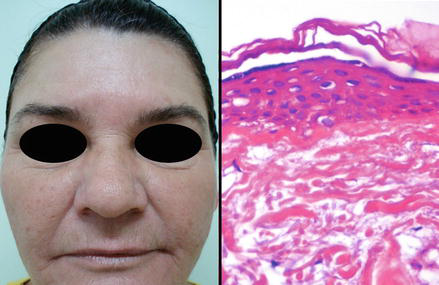
The ablative result can be noticed after a week (Fig. 3).
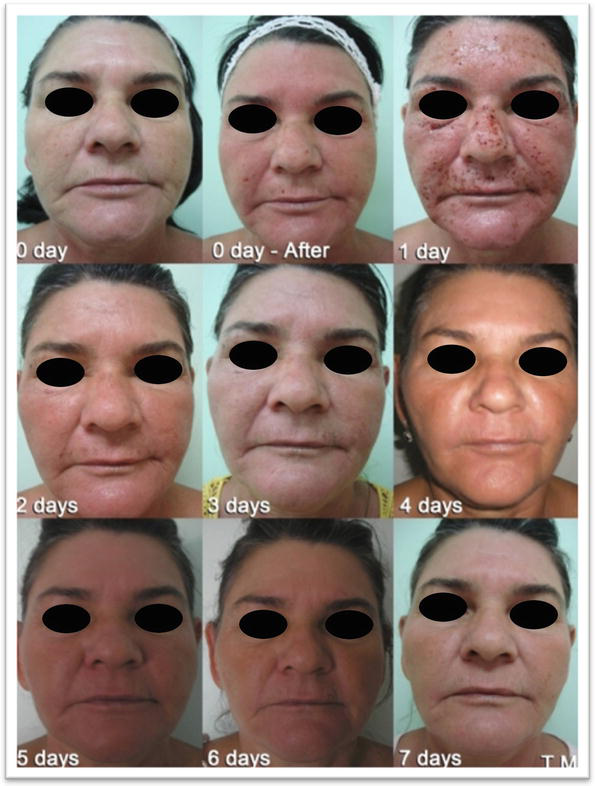
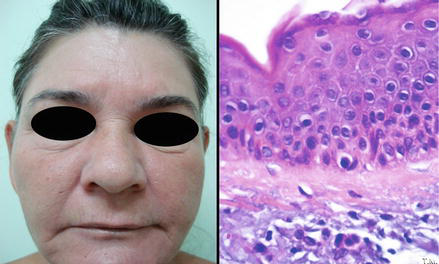
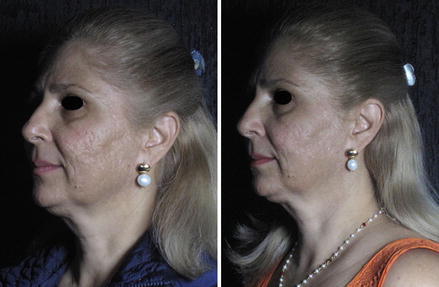
The effective collagen production begins after 1 month and continues for 3 months (Figs. 4 and 5). Therefore, minimal interval between sessions is 45 days.
Application Mode for Distensible Acne Scars
For the treatment of distensible acne scars, it is applied five stacks on each scar, using the medium stationary tip, with pulse duration of 0.2 s and power of 50 W, followed by seven passes on full face, using the rotative tip in several directions, with 50 W power and pulse duration of 30 s (Fig. 6).
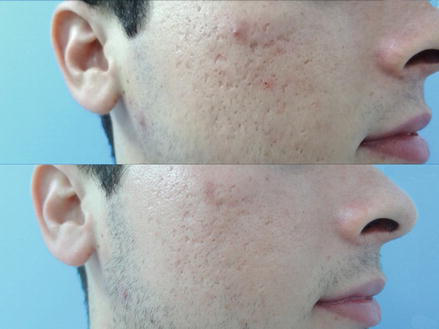
Application Mode for Non-distensible Acne Scar or for Chicken Pox Scars
For the treatment of non-distensible acne scars, it is applied five stacks on each scar (specially the borders), using the medium stationary tip, with pulse duration of 0.2 s and power of 50 W, followed by seven passes on full face, using the rotative tip in several directions, with 50 W power and pulse duration of 30 s (Fig. 7).
Application Mode for Stretch Marks
For the treatment of stretch marks, make several passes (five to ten) with the rotative tip, with 50 W of power and 30 s of pulse duration, in different directions, until bleeding points are observed throughout the treatment area.
Application Mode for Wrinkles and for Fine Lines
For the treatment of wrinkles and fine lines, it is applied three stacks on fine lines and five stacks on wrinkles, using the medium stationary tip, with pulse duration of 0.2 s and power of 50 W, followed by seven passes on full face, using the rotative tip in several directions, with 30 s pulse duration and 50 W power.
Side Effects and Management
The most important side effect is post-inflammatory hyperpigmentation (Kono et al. 2009). In order to avoid it, always prepare patients 1 month before the procedure (especially higher photo-types or patients of mixed descent) with glycolic acid and bleaching agents. As soon as the complete reepithelialization is obtained, begin applying sunscreen UVA/UVB 50+. Hyperpigmentation usually begins in the second or third week after the procedure; thus, after 10 days start using topic corticosteroids in the morning under sunscreen associated with bleaching agents at night for a month. Additionally, the use of oral antioxidants is recommended (pycnogenol, resveratrol, and Polypodium leucotomos).
Take Home Messages
- The fractional micro-plasma RF is a kind of fractional laser.
- It is indicated for several aesthetic procedures, e.g., acne scars, striae, and skin rejuvenation.
- Results are similar to the ones obtained with fractional CO2 but with a smaller downtime.
References
Alexiades AM, Dover JS, Ardnt KA. The spectrum of laser skin resurfacing: non-ablative, fractional and ablative laser resurfacing. J Am Acad Dermatol. 2008;58:719–37.
Alster TS, Konda S. Plasma skin resurfacing for regeneration of neck, chest and hands: investigation of a novel device. Dermatol Surg. 2007;33:1315–21.
Fitzpatrick R, Bernstein E, Iyer S, Brown D, Andrews P, Penny K. A histopathologic evaluation of the plasma skin regeneration system (PSR) versus a standard carbon dioxide resurfacing laser in an animal model. Lasers Surg Med. 2008;40:93–9.
Gonzalez MJ, Sturgill WH, Ross V, Uebelhoer NS. Treatment of acne scars using the plasma skin regeneration (PSR) system. Lasers Surg Med. 2008;40:124–7.
Halachmi S, Orenstein A, Meneghel T, Lapidot M. A novel fractional micro-plasma radio frequency technology for treatment of facial scars and rhytids: a pilot study. J Cosmet Laser Ther. 2010;12:208–12.
Kono T, Groff WF, Sakurai H, Yamaki T, Soejima K, Nozaki M. Treatment of traumatic scars using plasma skin regeneration (PSR) system. Lasers Surg Med. 2009;41:128–30.
Lee HS, Lee JH, Ahn GY, Lee DH, Shin JW, Kim DH, et al. Fractional photothermolysis for the treatment of acne scars: a report of 27 Korean patients. J Dermatolog Treat. 2008;19:45–9.
Manstein D, Herron GS, Sink RK, Tanner H, Anderson RR. Fractional photothermolysis: a new concept of thermal injury. Lasers Surg Med. 2004;34:426–38.
Tanzi E, Wanitphakdeedecha R, Alster TS. Fraxel laser indications and long-term follow-up. Aesthet Surg J. 2008;28:675–8.
Wang LZ, Ding JP, Yang MY, Chen DW, Chen B. Treatment of facial post-burn hyperpigmentation using micro-plasma radiofrequency technology. Lasers Med Sci. 2015;30:241–5.
Xiu F, Li-hong L, Alexiades-Armenakas MR, Luebberding S, Cui-ping S, Yue H, et al. Histological and electron microscopic analysis of fractional micro-plasma radio-frequency technology effects. J Drugs Dermatol. 2013;12:1210–4.