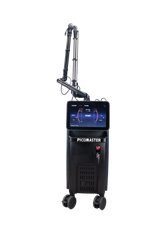
Picosecond Laser Work Principle:
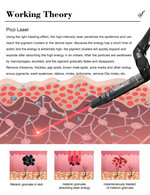
Picosecond Laser Technology:
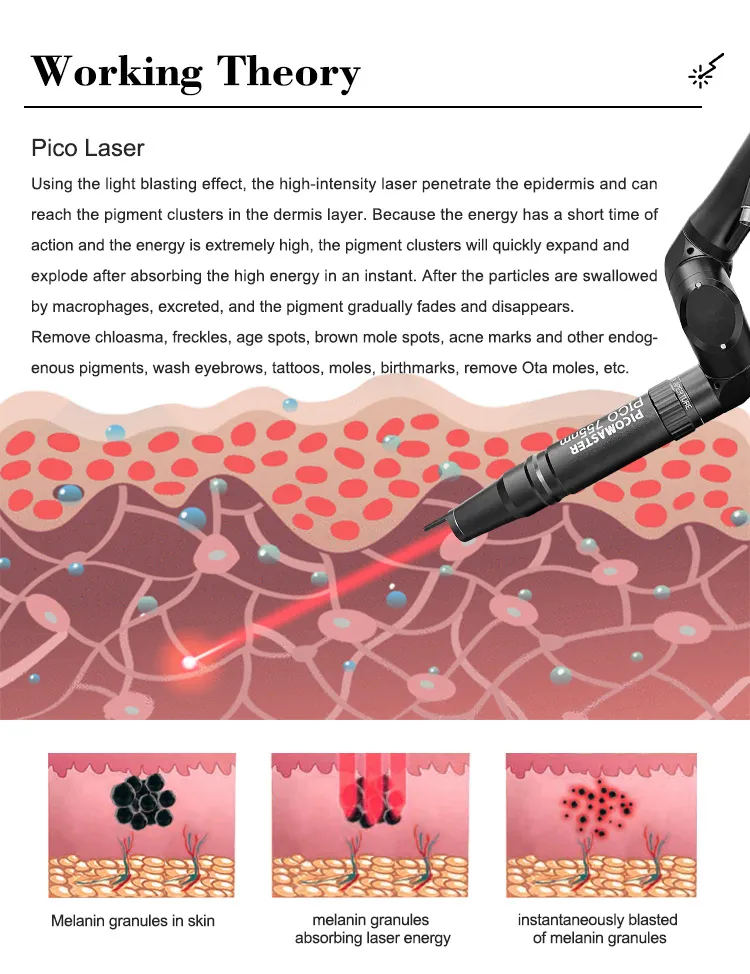
Ultrashort pulse duration (1 picosecond = 1/1,000,000,000,000 seconds) uses the "photoacoustic effect"
to crush the pigment into dust-like particles. High-intensity laser penetrates the epidermis
and can reach the pigment clusters in the dermis. Due to the short energy action time and extremely high energy,
the pigment clusters will expand and burst rapidly after absorbing high energy in an instant.
The particles are swallowed by macrophages and excreted from the body, and the pigment
gradually fades and disappears, minimizing thermal damage and reducing the risk of pigmentation.
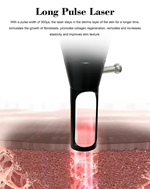
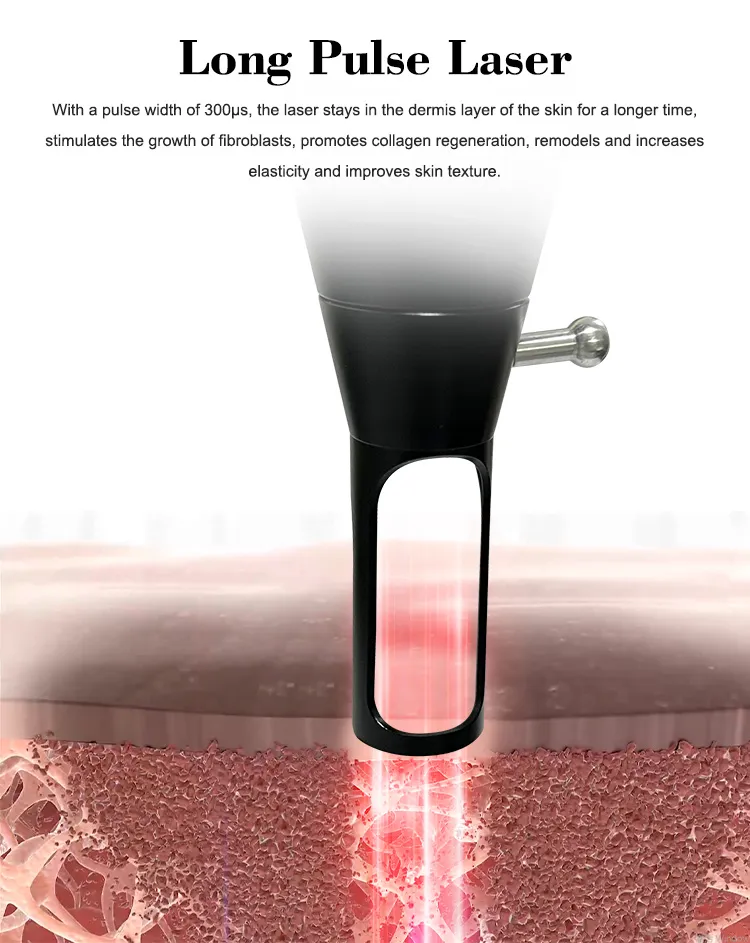
Long Pulse Laser Technology:
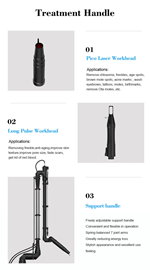
The pulse width is 300us, and the laser stays in the dermis of the skin longer, stimulating the growth of fibroblasts,
promoting collagen regeneration, reshaping and increasing elasticity, and improving skin texture.
Picosecond Laser and Q-Switched Nd: Yag Laser Comparison:
Picosecond laser and Q-switched laser are often used for tattoo removal and skin rejuvenation,
but their effectiveness varies greatly.
1.Pulse Width:
Q-switched laser pulse width: nanosecond level (1 nanosecond = 10⁻⁹ seconds),
which is a traditional laser technology that crushes pigment particles through photothermal effect.
Picosecond laser pulse width: picosecond level (1 picosecond = 10⁻¹² seconds),
1000 times faster than Q-switched laser, which means that picosecond laser can provide shorter
and more powerful energy bursts, thereby achieving faster and more precise treatment.
2.Effect comparison:
Q-switched laser: suitable for epidermal pigmentation, but limited effect on chloasma and colored tattoos,
requiring multiple treatments.
Picosecond laser: due to shorter pulses and more concentrated energy, it can treat stubborn pigmentation
(such as chloasma), colored tattoos and refractory tattoos, and the single-time effect is more significant,
and the number of treatments is reduced.
3.Thermal damage risk:
Q-switched laser generates more heat due to nanosecond pulses, which may cause slight redness,
swelling, and scabs, and the recovery period is about 3-7 days.
Picosecond laser has less thermal damage, faster recovery after surgery (1-3 days), less pain,
and is suitable for sensitive skin
Long Pulse Picosecond Laser Function :
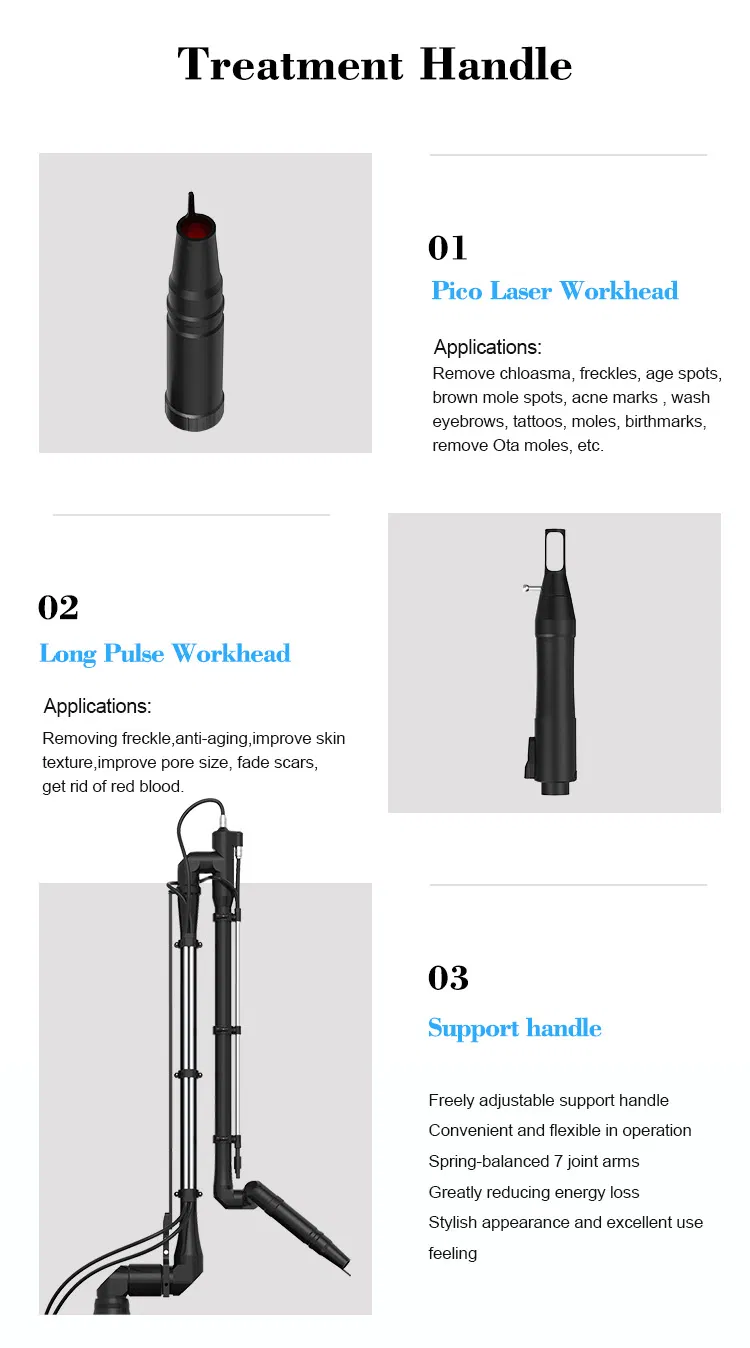
Tattoo Removal: Effective on black, blue, green, and multicolored tattoos, requiring only 2-4 sessions
(vs. 5-10 with conventional lasers).
Pigmentation: Freckles, sun spots, melasma, post-inflammatory hyperpigmentation, and acne scars.
Skin Rejuvenation: Minimizes pores, reduces wrinkles, tightens skin, and evens tone for anti-aging
and post-procedure recovery.
Long Pulse Picosecond Laser Advantage:
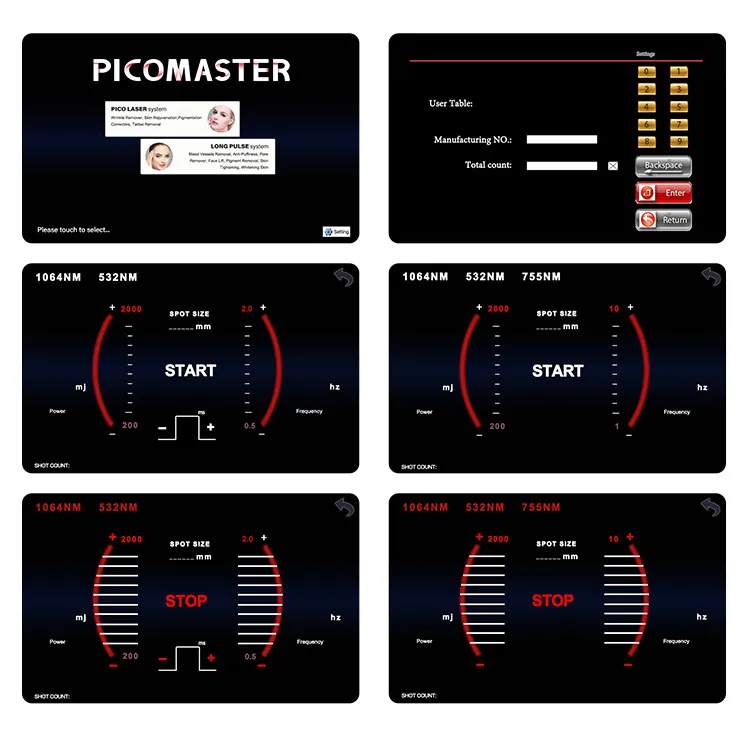
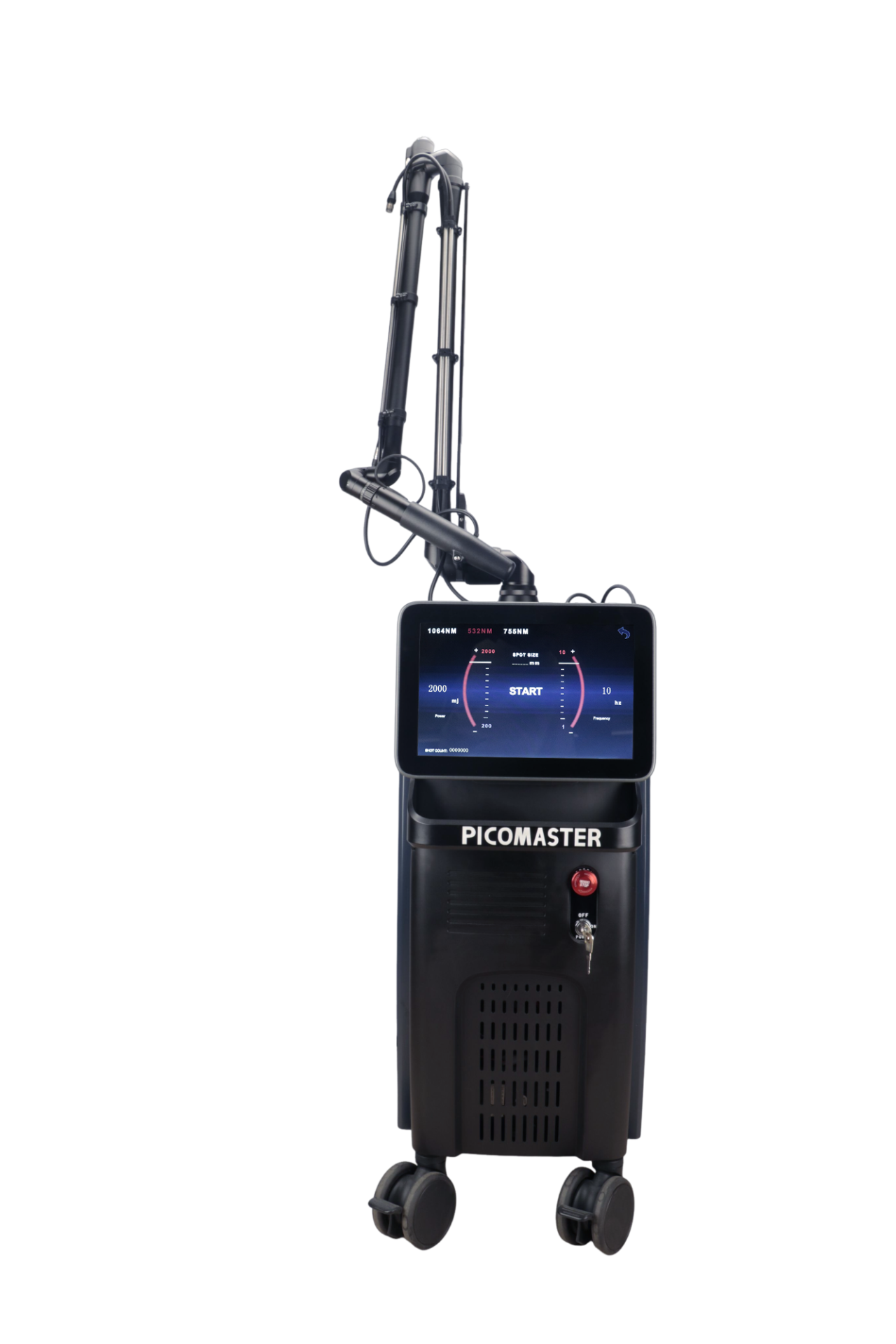
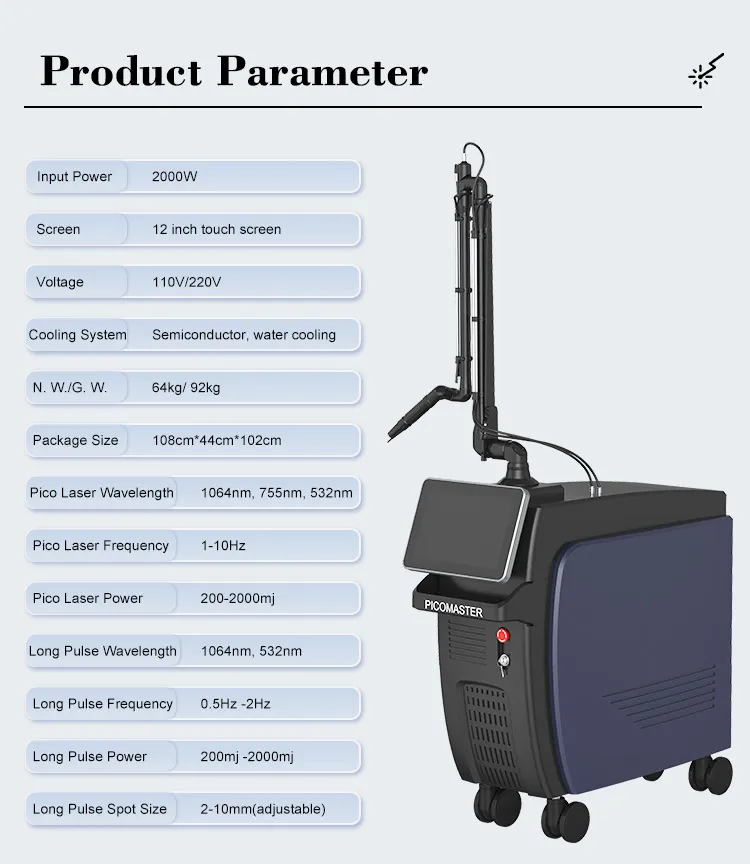
Multi-wavelength versatility: 532nm, 755nm and 1064nm modes address complex pigmentation issues
(e.g. multi-color tattoos, stubborn spots).
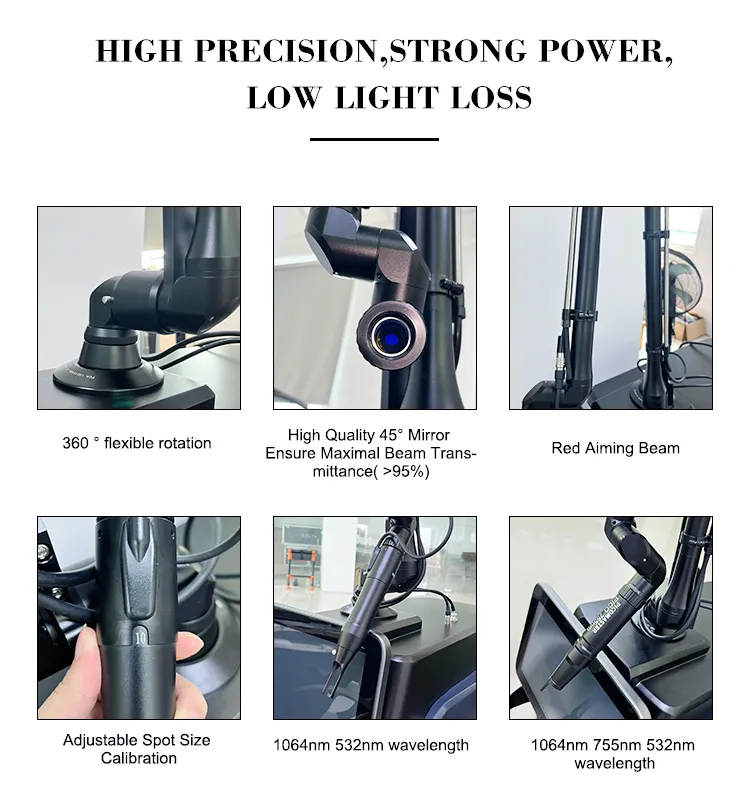
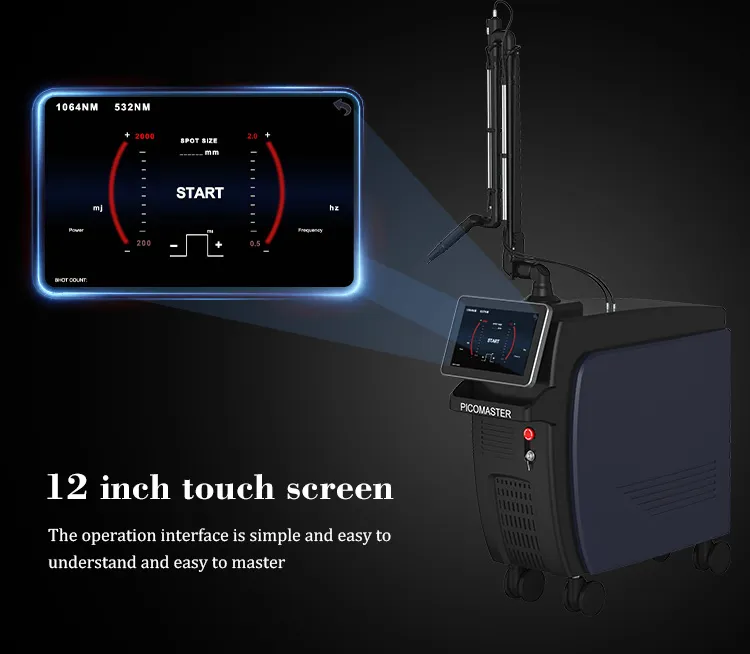
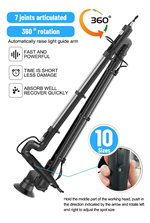
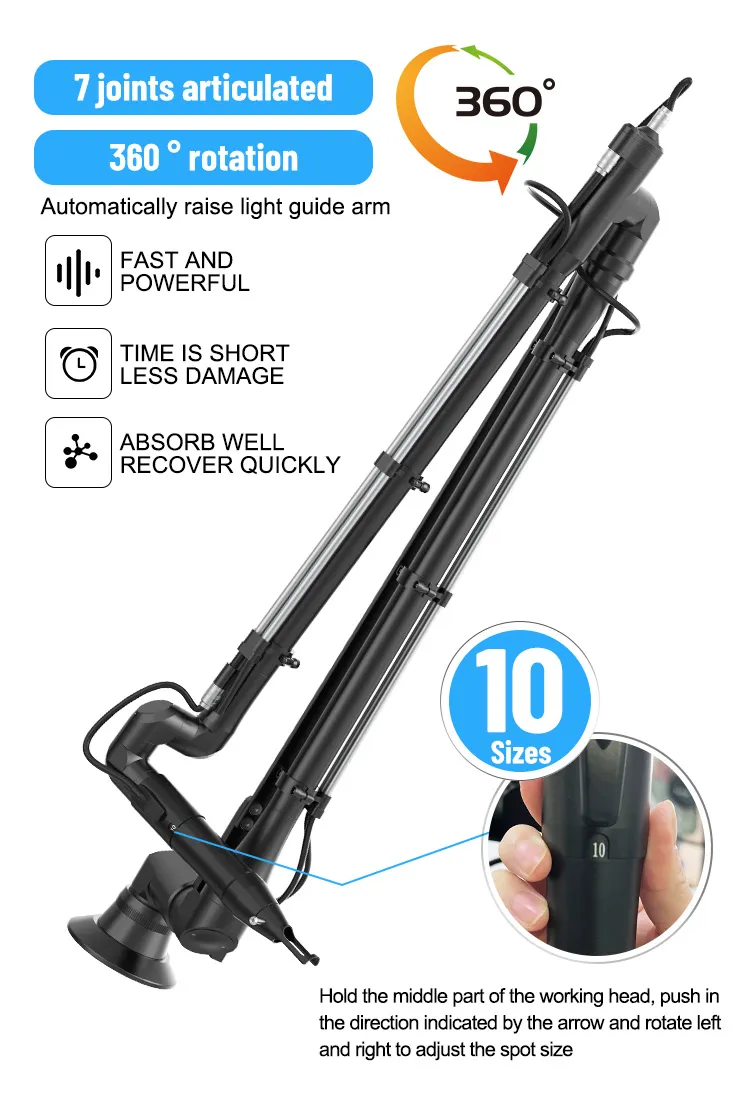
Intelligent energy control: inch touch screen, 7-joint articulated arm imported from the United States,
adjusts energy output to ensure precision.
Fast and comfortable: Picosecond laser treatment, 25% shorter time, minimal downtime (1-3 days).
Dual function: One device can simultaneously remove tattoos/pigmentation and anti-aging, improving clinic efficiency.